
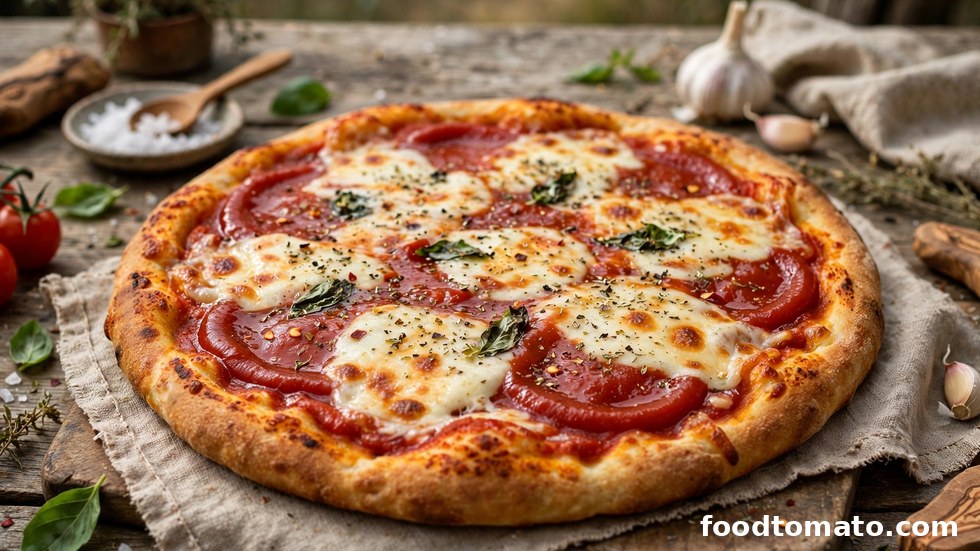
Pizza night was supposed to happen tonight, but the jar of pizza sauce in the fridge is empty — and nobody wants a grocery run at 6 PM. Before you order takeout, check your refrigerator door: if there is a bottle of ketchup in there, you already have everything you need for a genuinely delicious homemade pizza sauce.
This quick recipe turns everyday ketchup into a rich, herby pizza sauce in ten minutes flat, with no cooking required and only pantry staples. Below are the exact ratios, instructions, variations, and storage tips that make this ketchup-based pizza sauce a weeknight lifesaver.
- Why Ketchup Makes a Brilliant Pizza Sauce Base
- Ingredients You’ll Need
- The Quick Recipe: Step by Step
- Tips for the Best Texture and Flavor
- Flavor Variations to Try
- Storage and Make-Ahead
- More Ketchup-Based Recipes You’ll Love
- FAQs
Why Ketchup Makes a Brilliant Pizza Sauce Base
At its heart, ketchup is already concentrated tomato flavor: tomatoes cooked down with vinegar, sugar, salt, and warm spices until thick and glossy. A proper pizza sauce asks for almost the same foundation — sweet, tangy tomato with enough body to sit on dough without soaking through. Ketchup is not a lazy shortcut; it is a head start, with most of the flavor work already done.
Traditional pizza sauce simmers for twenty to thirty minutes to deepen the tomatoes. Ketchup has already been through that process. All you are doing is steering its flavor toward Italy with olive oil, garlic, and classic pizza herbs, then thinning it just enough to spread.
Use a good-quality ketchup with real tomato flavor — or homemade ketchup for full control over sweetness and seasoning. Taste it first: its sweetness tells you how much extra seasoning it needs.
Ingredients You’ll Need
This makes about one and a half cups of sauce — enough for two 12-inch pizzas with a generous layer. Everything here is a pantry standard.
- 1 cup ketchup — the flavor base; your favorite brand or homemade
- 2 tablespoons tomato paste — deepens the tomato flavor and adds richness
- 2 tablespoons olive oil — adds silkiness and helps the sauce spread smoothly
- 1 teaspoon garlic powder (or 2 small cloves, finely minced fresh garlic)
- 1 teaspoon dried oregano — the signature pizza-herb aroma
- 1/2 teaspoon dried basil
- 1/2 teaspoon onion powder
- 1/4 teaspoon freshly ground black pepper
- 1/4 teaspoon sugar — only if your ketchup tastes very sharp
- 2 tablespoons water — to loosen the sauce to a spreadable consistency
- Salt to taste — ketchup is already salty, so add sparingly
That is the complete list. No simmering pot, no canned tomatoes — just a bowl and a whisk.
The Quick Recipe: Step by Step
The whole process takes ten minutes, and most of that is whisking.
Step 1: Combine the tomato base
Add the ketchup and tomato paste to a medium bowl and whisk until completely smooth. The tomato paste is the secret weapon — it intensifies the cooked-tomato depth that plain ketchup lacks and gives the sauce a more authentic pizzeria character.
Step 2: Whisk in the oil and water
Pour in the olive oil and water, whisking steadily. The oil emulsifies for a glossy finish, while the water thins the ketchup just enough to spread across raw dough without tearing it. Aim for a consistency slightly looser than ketchup from the bottle.
Step 3: Add the seasonings
Stir in the garlic powder, oregano, basil, onion powder, and black pepper. Mix thoroughly so the dried herbs are evenly distributed rather than floating in clumps.
Step 4: Taste and adjust
Taste a spoonful and ask three questions: sweet enough, tangy enough, seasoned enough? Add sugar if the vinegar bite is too sharp, salt if it tastes flat, or extra oregano for more pizza character. Then rest the sauce for five minutes — the dried herbs hydrate and bloom, and the flavor noticeably improves.
Step 5: Sauce your pizza
Spread about three-quarters of a cup over each 12-inch round of dough, leaving a half-inch border for the crust. Add cheese and toppings, and bake as usual.
Tips for the Best Texture and Flavor
Never skip the resting time. Dried herbs need a few minutes in liquid to release their oils. Also resist the urge to pile the sauce on thick — ketchup-based sauce is more concentrated than thin marinara, so a modest layer goes further and too much makes the crust soggy.
Watch the bake as well. The sugar in the ketchup makes the sauce caramelize beautifully — but it can scorch under direct high heat. Keep the sauce mostly covered by cheese and toppings, and bake at 450-475°F.
Flavor Variations to Try
For a spicy arrabbiata-style sauce, stir in half a teaspoon of red pepper flakes and a pinch of smoked paprika. For a roasted-garlic version, replace the garlic powder with two tablespoons of mashed roasted garlic. A fresh-herb upgrade works wonderfully too: swap the dried herbs for a tablespoon each of finely chopped fresh oregano and basil, stirred in right before saucing. Feeding kids who love sweeter sauce? Add an extra teaspoon of sugar and a pinch of onion powder.
Storage and Make-Ahead
Transfer leftovers to a clean jar and refrigerate for up to one week. The flavor improves after a day as the herbs bloom, so making it the night before pizza night is smart. Freeze half-cup portions for up to three months; thaw overnight in the fridge, stir well, and spread cold onto the dough.
More Ketchup-Based Recipes You’ll Love
If this recipe convinced you that ketchup is far more versatile than a fry condiment, there is more to explore. Try a ketchup-glazed meatloaf, where the same sweet-tangy base bakes into a caramelized topping that is pure comfort food. For your next cookout, a homemade BBQ sauce made from a ketchup base comes together in minutes. And for party food, cocktail sauce and other ketchup-based dips round out a snack spread with almost no effort.
FAQs
Does pizza sauce made from ketchup taste like ketchup?
No — not once it is seasoned and baked. The olive oil, garlic, and Italian herbs transform the flavor completely, and the tomato paste adds cooked-tomato depth. On a finished pizza it simply tastes like a rich, slightly sweet homemade pizza sauce.
Can I use homemade ketchup instead of store-bought?
Absolutely — homemade ketchup is the best choice, since you control sweetness, salt, and spice from the start. If yours is less sweet than commercial brands, add a pinch of sugar; if more intensely spiced, ease back on the dried herbs.
Do I need to cook this sauce before putting it on the pizza?
No cooking is required. The sauce goes onto the raw dough cold and cooks in the oven with the pizza. Cooking it beforehand would reduce it too much — the ten-minute no-cook method is the whole point.
How much sauce should I use per pizza?
About three-quarters of a cup for a 12-inch pizza, spread thin with the back of a spoon and leaving a half-inch border for the crust. Ketchup-based sauce is concentrated, so a modest layer delivers full flavor without a soggy crust.