
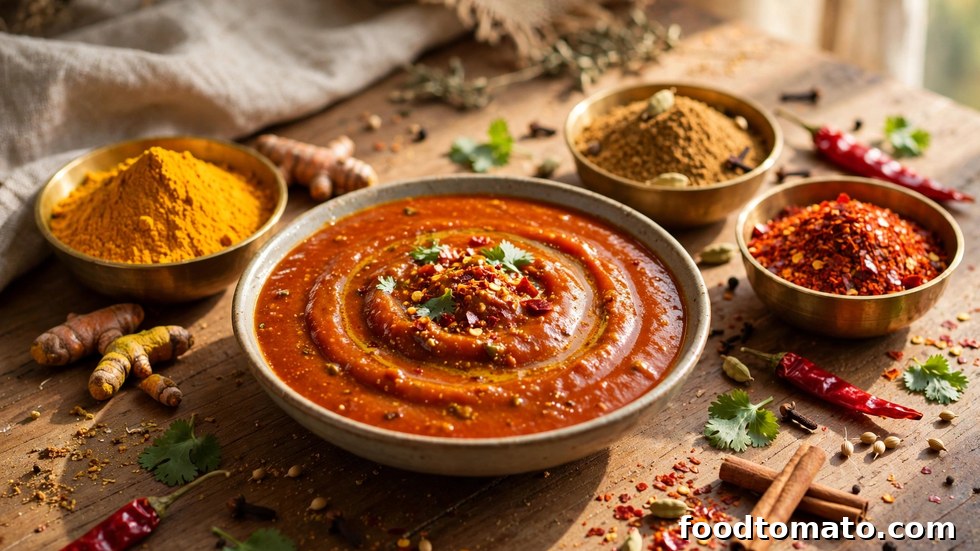
Some flavor combinations sound odd until the first bite proves them brilliant. Curry-spiced ketchup takes your familiar tomato base and seasons it with toasted cumin, coriander, turmeric, ginger, and garam masala, plus tamarind for tang. The result is golden-red, aromatic, and completely addictive: sweet like ketchup should be, with a warm spice hum underneath that makes fries, samosas, and grilled chicken taste extraordinary. It is not a curry sauce pretending to be ketchup — it is a true ketchup, thick and glossy, that happens to carry the soul of Indian spice. One pot, about an hour, and a spice drawer you probably already own.
Why Curry Spices and Ketchup Are a Natural Match
Tomatoes and warm Indian spices have been partners for centuries, from masala sauces to chutneys. Ketchup is built on the same foundation — sweetened, vinegared tomatoes — so it welcomes those spices like an old friend. The key is restraint: the spices season the background the way allspice and clove season classic ketchup. Toasted cumin adds nuttiness, coriander adds citrusy brightness, turmeric gives gentle earthiness and a golden hue, ginger adds fresh warmth, and garam masala ties it all together. Tamarind, the souring agent of so many chutneys, gives the tang a fruity depth plain vinegar cannot match. The result is recognizably ketchup on first taste — and intriguingly different on the second.
Ingredients
Makes about 3 cups (roughly 48 tablespoons).
- 2 cans (28 ounces / 800 g each) crushed tomatoes
- 1 medium yellow onion, finely diced
- 1 tablespoon fresh ginger, grated
- 3 cloves garlic, minced
- 2 teaspoons cumin seeds
- 2 teaspoons coriander seeds
- 1 teaspoon ground turmeric
- 1 1/2 teaspoons garam masala
- 1/2 teaspoon Kashmiri chili powder or sweet paprika
- 1/2 cup apple cider vinegar
- 2 tablespoons tamarind paste (seedless)
- 1/2 cup jaggery or dark brown sugar, packed
- 3 tablespoons tomato paste
- 1 teaspoon fine sea salt, plus more to taste
- 1/2 teaspoon black pepper
- 1/4 teaspoon ground cardamom
- 1/2 cup water
- 2 tablespoons neutral oil
Step-by-Step Instructions
- Toast the whole spices. Heat a large heavy pot over medium heat. Toast the cumin and coriander seeds in the dry pot 60 to 90 seconds until fragrant and a shade darker, then grind to a powder.
- Bloom the aromatics. Add the oil to the same pot. Cook the onion 6 to 7 minutes until soft and golden at the edges. Stir in the ginger and garlic; cook 1 minute more.
- Toast the ground spices. Add the ground cumin-coriander, turmeric, garam masala, chili powder, cardamom, and tomato paste. Stir constantly for 90 seconds until brick-red and intensely aromatic. Do not scorch.
- Build the pot. Pour in the crushed tomatoes, water, vinegar, tamarind paste, jaggery, salt, and pepper. Stir until the tamarind and sugar dissolve.
- Simmer. Bring to a gentle boil, reduce to low, and simmer uncovered 60 to 70 minutes, stirring every 10 minutes, until thick, reduced by about a third, and deep golden-red.
- Blend until silky. Cool 10 minutes, then blend 2 to 3 minutes until completely smooth. Press through a fine-mesh sieve to catch fibrous ginger or spice bits.
- Balance and jar. Taste warm: add salt, tamarind, jaggery, or chili powder to taste. The spices should be warm and aromatic, never harsh. Cool completely, funnel into clean jars, and refrigerate — it improves markedly after 24 hours.
Nutrition Facts
Per tablespoon (approximately 17 g):
| Nutrient | Amount |
|---|---|
| Calories | 24 |
| Total Fat | 0.3 g |
| Sodium | 90 mg |
| Total Carbohydrates | 5.4 g |
| Sugars | 4.6 g |
| Protein | 0.4 g |
| Fiber | 0.4 g |
Tips for the Best Curry-Spiced Ketchup
Toast whole spices when you can
Pre-ground cumin and coriander lose their volatile oils within weeks, and those oils are where the flavor lives. Toasting whole seeds and grinding fresh gives vivid, almost floral character. If you only have ground spices, make sure they are under 6 months old and bloom them well in the hot oil.
Treat tamarind with respect
Tamarind paste varies wildly in strength between brands. Start with the listed 2 tablespoons, taste after simmering, and add more by the teaspoon for extra fruity tang. If using the thick block type, dissolve it in hot water and strain out fibers first.
Keep the heat gentle
This ketchup should be warmly spiced, not hot — the spices are the star, not the chili. Kashmiri chili powder gives gorgeous color with mild heat. Add real fire separately (cayenne or green chili) so you control heat independently of curry flavor.
Variations and Flavor Adjustments
For a coconut curry ketchup, replace 1/2 cup of the water with coconut milk and simmer with a bruised lemongrass stalk (remove before blending). For vindaloo-style heat, double the chili powder, add 1/2 teaspoon of cayenne, and an extra tablespoon of vinegar. For a South Indian tadka finish, sizzle 1/2 teaspoon each of mustard and cumin seeds with a few curry leaves in hot oil and stir into the blended ketchup. No jaggery? Dark brown sugar works; coconut sugar adds a lovely caramel note. For kids, skip the chili powder and lean on sweet spices like cardamom and a pinch of cinnamon.
Storage
Refrigerated in clean airtight jars, it keeps 6 to 8 weeks. For pantry storage, water-bath can in sterilized half-pint jars for 15 minutes; sealed jars keep up to a year. Freeze in ice-cube trays for up to 6 months — the spices hold up beautifully. Store in glass, not plastic: turmeric stains permanently.
Best Ways to Use It
- Samosas and pakoras — the obvious and perfect pairing for fried Indian snacks.
- Masala fries — toss hot fries with chaat masala and serve this alongside.
- Grilled chicken and kebabs — brush on during the last minutes or serve for dipping.
- Lamb burgers — with mint yogurt and pickled onions for an Indian twist.
- Masala omelets — a spoonful next to one is a breakfast revelation.
- Roasted cauliflower — drizzle over it with a squeeze of lime.
Frequently Asked Questions
Is this ketchup spicy?
As written it is mildly warm, not hot — aromatic spice and tangy sweetness dominate, with gentle background warmth. Drop the chili powder entirely for spice-sensitive eaters; add cayenne for heat lovers.
What if I cannot find tamarind paste?
Substitute 2 extra tablespoons of vinegar plus 1 tablespoon of brown sugar — you get the acidity and a hint of fruity depth, though not the full tamarind character. Tamarind paste is worth seeking out at an Indian or Asian grocery.
Can I use curry powder instead?
In a pinch, replace the individual spices with 3 tablespoons of mild curry powder, toasted the same way. The flavor will be pleasant but less layered. Still add the fresh ginger and tamarind — they do the most to make it taste like this recipe.
Is this recipe vegan and gluten-free?
Yes to both as written. Just check that your tamarind paste and garam masala contain no gluten-based anti-caking additives — pure spice blends are fine.
Key Takeaways
- Toasted cumin, coriander, turmeric, ginger, and garam masala give warm Indian-spice character while keeping it unmistakably ketchup.
- Tamarind paste adds a fruity, chutney-like tang that plain vinegar cannot replicate; adjust to your brand’s strength.
- Toasting whole spices fresh and blooming them in oil builds far deeper flavor than stirring in pre-ground spices.
- Refrigerated it keeps 6 to 8 weeks, cans for a year, and freezes well — but store in glass, since turmeric stains plastic.
Curry-spiced ketchup is the bottle your fridge has been missing — familiar enough for the kids’ fries, interesting enough for dinner-party kebabs. Make a batch, rest it overnight, and taste how beautifully tomatoes and warm spices get along. Then explore our other homemade ketchup recipes for your next experiment.