
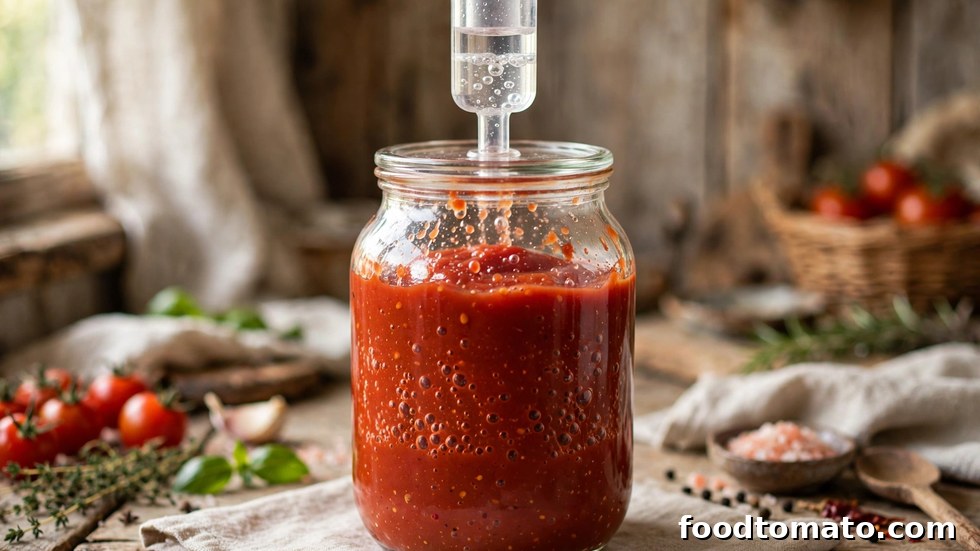
What if your ketchup could do more than taste great — what if it were alive? Fermented ketchup is exactly that: tomato ketchup cultured with beneficial lactic-acid bacteria, the same family of microbes behind yogurt, sauerkraut, and kimchi. The result is a condiment with a deeper, more complex tang than vinegar-based ketchup, a gentle fizz of natural carbonation, and a dose of probiotics in every spoonful. It sounds like advanced kitchen science, but the process is beautifully simple — salt, tomatoes, time, and a little patience. This guide gives you the full method, the safety rules that keep fermentation friendly, and the troubleshooting know-how to ferment with confidence.
How Fermentation Works in Ketchup
Lacto-fermentation relies on Lactobacillus bacteria, which occur naturally on vegetables. Given salt (which suppresses harmful microbes while letting the good ones thrive) and an oxygen-free environment, these bacteria convert sugars into lactic acid. That acid is what preserves the ketchup — dropping the pH into the safe zone — and what gives fermented ketchup its distinctive bright, complex sourness that vinegar alone cannot match. You are not adding anything exotic; you are creating the conditions for the right microbes to do what they have done for thousands of years.
Important safety note: fermented ketchup is a refrigerator product, not a canning product. The live cultures are the point, and heat processing would kill them. Do not water bath can fermented ketchup — keep it cold, where the acidity and refrigeration together keep it safe for months.
Ingredients and Equipment
- 2 pounds (about 900 g) ripe tomatoes, or 1 quart of plain tomato puree with no additives
- 1 small onion, roughly chopped (optional, for depth)
- 2–3 cloves garlic (optional)
- 1 tablespoon non-iodized salt — sea salt or pickling salt (iodine can inhibit fermentation)
- 2 tablespoons whey from plain yogurt or 1 probiotic capsule (optional starter; speeds and stabilizes the ferment)
- 1/4 cup honey, maple syrup, or sugar (feeds the bacteria; sweetness mellows during fermentation)
- Spices to taste: 1/2 teaspoon each of allspice, clove, cinnamon, or your favorite ketchup spice blend
- Quart-size glass jar with lid, or a fermentation jar with airlock
- Blender or food processor, fine-mesh strainer, clean cloth
Use non-iodized salt and, if your tap water is heavily chlorinated, filtered water for any rinsing — chlorine is designed to kill microbes, including the ones you want. Everything that touches the ferment should be scrupulously clean, though full sterilization is unnecessary; the salt and acidity do the protective work.
Step-by-Step Instructions
- Blend the base. Roughly chop the tomatoes (and onion and garlic, if using) and blend until completely smooth. Strain through a fine-mesh sieve if you prefer a silky ketchup, pressing out the solids.
- Mix in salt, sweetener, and starter. Whisk the salt, honey or sugar, spices, and whey or probiotic powder into the puree until fully dissolved. Taste it — it should taste seasoned and a touch salty; the saltiness mellows as fermentation proceeds.
- Jar it with headspace. Pour into your clean quart jar, leaving 1–2 inches of headspace. Fermentation produces gas, and an overfilled jar will bubble over. Press out air pockets and wipe the rim.
- Seal and wait. Close the lid snugly (or fit the airlock). Leave the jar at room temperature, 65–75°F (18–24°C), away from direct sunlight. If using a regular lid, “burp” it once daily — open briefly to release built-up gas, then reseal.
- Watch for signs of life. Within 24–72 hours you should see tiny bubbles rising, and the mixture may lighten slightly in color. It will start to smell pleasantly tangy, like mild sauerkraut with tomato.
- Taste and decide. Start tasting at day 3. It is ready when it tastes brightly tangy and pleasantly sour to your liking — typically 3–7 days. Warmer kitchens ferment faster; cooler ones slower.
- Refrigerate to finish. Move the jar to the refrigerator. Cold slows fermentation to a crawl, letting flavor mature without over-souring. It is ready to eat immediately but improves over the first week chilled.
Fermentation Timing Reference
| Room temperature | Typical ferment time | Flavor result |
|---|---|---|
| 75°F+ (24°C+) — warm kitchen | 2–4 days | Fast, bright sourness; watch closely |
| 68–74°F (20–23°C) — ideal | 3–5 days | Balanced tang, best complexity |
| 60–67°F (16–19°C) — cool room | 5–8 days | Slower, milder, very smooth |
| Below 60°F (16°C) | Unreliable | Too slow; move somewhere warmer |
Safety Rules for Fermentation
Fermentation is safe when the good bacteria win the race, and salt plus acidity is how you rig that race. Use the full tablespoon of salt per quart — do not reduce it. Keep everything submerged; exposed food at the surface is where mold starts. If you see fuzzy mold (any color), pink or orange slime, or smell anything rotten or putrid (as opposed to pleasantly sour), discard the batch — do not scrape and continue. Kahm yeast, a harmless white film sometimes forming on the surface, can be skimmed off, but when in doubt, throw it out. And remember: fermented ketchup lives in the refrigerator, where it keeps 3–6 months, its acidity and the cold working together.
Tips for the Best Flavor
Use the ripest tomatoes you can find
Fermentation amplifies whatever flavor is there. Peak-season, fully ripe tomatoes give a sweet, deep base that balances the sourness beautifully; pale supermarket tomatoes in winter give a thinner result.
Do not overshoot the sourness
Taste daily once bubbles appear. Fermented ketchup keeps souring slowly even in the fridge, so refrigerate it when it is just slightly less tangy than your ideal — it will arrive there within a week of chilling.
Blend it silky after fermenting
A quick blitz with an immersion blender after the ferment smooths out any texture changes and reincorporates separation, giving you that classic ketchup body with a brand-new flavor.
Troubleshooting
Nothing is happening after 3 days. Is it dead?
Probably just slow — cool rooms, very fresh chlorinated water residue, or iodized salt can stall things. Move the jar somewhere warmer (top of the fridge is often ideal) and give it two more days. If there is still zero activity and no off smells, stir in a tablespoon of live brine from sauerkraut or a fresh probiotic capsule to inoculate it.
There is a white film on top. Mold?
Most likely kahm yeast — flat, white, wrinkly, and harmless, though it can taste slightly off. Skim it, make sure the ketchup is well mixed, and refrigerate promptly. Fuzzy, raised, or colored spots are mold: discard the batch.
It tastes too sour. Can I fix it?
Over-fermented ketchup is still safe if there are no spoilage signs — it is just very tangy. Blend in a little honey or a spoonful of tomato paste to round it out, and use it in cooked dishes like barbecue sauce or meatloaf where the extra tang becomes an asset.
Key Takeaways
- Fermented ketchup uses salt and lactic-acid bacteria — not vinegar — to create tang, complexity, and probiotic benefits in 3–7 days at room temperature.
- Use non-iodized salt at full strength, keep everything clean and submerged, and burp the jar daily if you are not using an airlock.
- It is a refrigerator product, never a canning product: chill it when the tang tastes right, and it keeps 3–6 months cold.
- Discard any batch with fuzzy mold, pink slime, or rotten smells; skim harmless kahm yeast and taste daily to catch the perfect sourness.
Fermented ketchup is the kind of project that turns curious cooks into lifelong fermenters — one jar of bubbling tomatoes and you will start eyeing every vegetable in the crisper. Give it a try with peak-season tomatoes and taste the difference live cultures make. For the classic cooked version, browse our traditional ketchup recipes, and check the storage guide for keeping all your condiment experiments at their best.