
Ketchup might look like an all-American invention, but its story — and its uses — span the globe. From Tokyo coffee shops to Manila street carts to Berlin food stands, cooks on nearly every continent have adopted ketchup and bent it to local tastes in ways that would surprise most Americans. Some of these dishes use ketchup as a seasoning, some as a sauce base, and a few in combinations that sound strange until you taste them. What unites them is the same logic that makes ketchup work at home: its sweet-tangy balance fixes blandness, cuts richness, and ties a dish together. Here is a tour of ketchup’s most unexpected international appearances.
Japan: Napolitan Spaghetti and Omurice
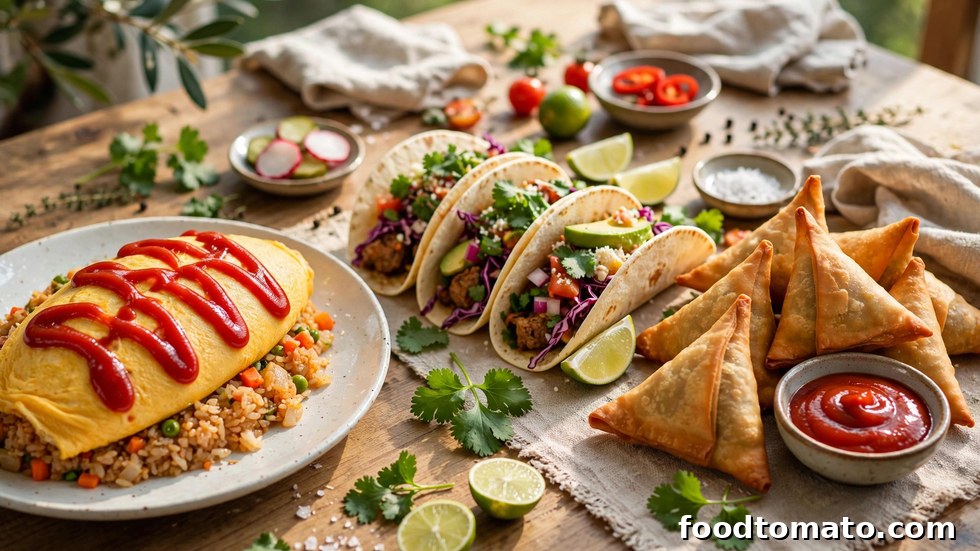
Japan embraced ketchup after World War II and created two beloved yoshoku (Western-style) dishes around it. Napolitan spaghetti tosses thick noodles with ketchup, sauteed onions, bell peppers, mushrooms, and sausage or ham — a sweet-savory pasta that has been a coffee-shop staple since the 1950s. Omurice wraps ketchup-seasoned fried rice in a thin omelet and finishes it with — you guessed it — more ketchup piped on top in decorative zigzags. To Japanese cooks, ketchup is not a shortcut; it is the defining flavor. Try making omurice at home with homemade ketchup and you will understand the devotion.
The Philippines: Banana Ketchup
During World War II, tomatoes were scarce in the Philippines, so food chemist Maria Orosa invented a ketchup from mashed bananas, vinegar, sugar, and spices — dyed red to look the part. Banana ketchup stuck around and is now a national icon, sweeter and fruitier than tomato ketchup. Filipinos use it on fried chicken, in spaghetti sauce (Filipino spaghetti is famously sweet), and as the base for dips. If you make tomato ketchup at home, try a small banana-ketchup batch too; the technique is nearly identical and the flavor is a revelation on grilled pork.
Germany: Currywurst
Berlin’s most famous street food starts with a simple grilled pork sausage, sliced and drowned in a warm sauce of ketchup simmered with curry powder, then dusted with more curry on top. Invented in 1949 by Herta Heuwer, who traded with British soldiers for ketchup and curry powder, currywurst now has its own museum in Berlin. The sauce is easy to recreate: warm one cup of ketchup with a tablespoon of curry powder, a teaspoon of paprika, and a splash of Worcestershire sauce. Serve over sliced bratwurst with a pile of fries.
China: Sweet and Sour Pork
That glossy red sweet-and-sour sauce at your local Chinese restaurant? In many kitchens outside China, it starts with ketchup. The classic Cantonese version uses vinegar and sugar with hawthorn or plum, but the adapted international version leans on ketchup for color, body, and tangy sweetness. A home version is simple: simmer ketchup with rice vinegar, sugar, soy sauce, and pineapple juice until glossy, then toss with crispy pork and peppers. It is a perfect example of ketchup doing quiet background work in a dish nobody associates with it.
Hong Kong: Ketchup Fried Rice and Borscht
Hong Kong’s cha chaan teng (tea restaurants) use ketchup in several signature dishes. Ketchup fried rice gets its pinkish hue and tangy kick from a generous squeeze of ketchup tossed through the wok with egg and ham. Even more surprising is Hong Kong-style borscht — a tomato soup inherited from Russian influence, adapted with ketchup and local seasonings into a sweet-sour comfort soup served with crusty bread. Both dishes show how ketchup functions as a flavor shortcut in fast, high-heat cooking.
Portugal: Pica-Pau
Pica-pau (meaning “woodpecker,” for the way you pick at it) is a Portuguese bar snack of bite-sized beef or pork cubes seared in olive oil and garlic, then finished with a sauce that often includes ketchup alongside mustard, beer or wine, and pickles. The ketchup adds body and a sweet counterpoint to the sharp pickles and garlic. Served with toothpicks and crusty bread for mopping, it is Portugal’s answer to the eternal question of what to eat with a cold beer.
Sweden and Finland: Ketchup on Everything
Scandinavians put ketchup on foods that would start arguments elsewhere: pasta, sausages, meatballs, even pizza. In Sweden, “ketchup” is practically a food group, and the local versions tend to be a bit sweeter and milder than American ones. The most famous export of this habit is arguably the Swedish take on spaghetti with ketchup — a weeknight staple for generations of kids. Before you judge, remember the logic: plain pasta and mild sausage need acidity and sweetness, and ketchup delivers both in one squeeze.
India: Indo-Chinese Sauces
Indo-Chinese cuisine — the beloved fusion born in Kolkata’s Chinese community — uses ketchup in dishes like chili chicken, Manchurian, and Schezwan-style sauces. Here ketchup provides the sweet-tangy base that balances soy sauce’s saltiness and fresh chilies’ heat. A typical Manchurian sauce simmers ketchup with soy sauce, garlic, ginger, and chili paste into a glossy coating for fried vegetable or chicken dumplings. If you love takeout-style Indo-Chinese flavors, ketchup is the ingredient you have been missing.
Tips for Cooking with Ketchup, International Style
When ketchup goes into a cooked sauce rather than onto a finished plate, treat it as a raw ingredient: simmer it for at least 5 to 10 minutes to mellow its sharp vinegar edge and deepen the tomato flavor. Balance it the way each cuisine does — with curry powder for German-style, soy and ginger for Indo-Chinese, or extra vinegar for sweet-and-sour. And use homemade ketchup when the dish puts tomato flavor front and center, as in Napolitan or currywurst sauce; the fresher taste genuinely shows.
Frequently Asked Questions
Is using ketchup in cooking considered authentic?
For the dishes above, yes — ketchup is the traditional ingredient, not a shortcut. Napolitan, currywurst, and banana ketchup were all invented with ketchup as a core component. Authenticity means honoring how a dish is actually made, and in these cases that includes ketchup.
Does ketchup taste the same in every country?
No. Ketchup formulas vary widely: Filipino banana ketchup is fruity, British ketchup tends to be tangier, and Swedish ketchup runs sweeter. That is part of why homemade ketchup is so useful — you can tune the sweetness and acidity to match the cuisine you are cooking.
What is the easiest international ketchup dish to try first?
Currywurst. If you can grill a sausage and warm ketchup with curry powder, you can make it in fifteen minutes. Omurice is the next step up — slightly more technique, but enormously rewarding.
Key Takeaways
- Ketchup is a core traditional ingredient in dishes from Japan (omurice, Napolitan) to Germany (currywurst) to the Philippines (banana ketchup).
- International cooks use ketchup as a seasoning, a sauce base, and a sweet-tangy balancer — rarely just as a tabletop condiment.
- When cooking with ketchup, simmer it 5 to 10 minutes to mellow the vinegar edge and deepen the flavor.
- Homemade ketchup lets you tune sweetness and acidity to match each cuisine, from Indo-Chinese to Hong Kong-style fried rice.
The next time someone calls ketchup boring, tell them about Berlin’s currywurst museum or Tokyo’s ketchup-piped omurice. Then pick one dish from this tour and cook it this week — your homemade ketchup is about to earn its passport. And if these global flavors sparked your curiosity, our ketchup marinade and BBQ sauce recipes are the perfect next stop.