
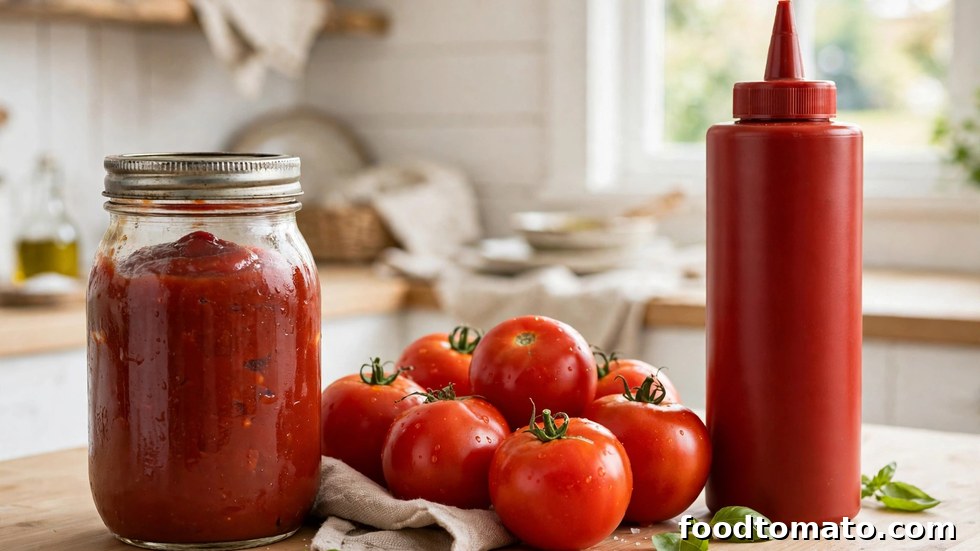
Ketchup looks innocent sitting next to the fries, but what is actually inside that squeeze? Depending on whether it came from your kitchen or a factory, the answer differs more than you might expect. Homemade and store-bought ketchup share the same basic DNA — tomatoes, vinegar, sweetener, salt, spices — but they diverge sharply on sugar type and quantity, sodium levels, and the long tail of additives that keep bottled ketchup shelf-stable for months. This article puts the two side by side with real numbers: calories, sugar, sodium, carbs, and additives, all compared per tablespoon. You will also learn where the biggest nutritional gaps are, which store-bought ingredients deserve your skepticism, and how to close the gap in whichever direction you choose. No scare tactics — just the facts, so you can decide what belongs in your fridge.
The Headline Numbers: Side-by-Side Comparison
All values below are per one-tablespoon (about 17g) serving. “Homemade” refers to a typical classic recipe like the one on this site; “store-bought” reflects the leading national brands:
| Nutrient | Homemade Ketchup | Store-Bought Ketchup | Difference |
|---|---|---|---|
| Calories | 15–18 | 17–20 | Slightly lower homemade |
| Total carbohydrates | 4g | 5g | About 20% less homemade |
| Total sugar | 3–3.5g | 4–5g | 1–1.5g less homemade |
| Added sugar | 2–2.5g (your choice) | 4g (usually HFCS or corn syrup) | You control the type and amount |
| Sodium | 80–110mg | 140–190mg | Roughly 40% less homemade |
| Potassium | 60–75mg | 45–55mg | More from real tomatoes |
| Fiber | 0.3–0.5g | 0.1–0.2g | Minimal in both |
| Fat | 0g | 0g | None in either |
| Protein | 0.3g | 0.2g | Negligible in both |
| Vitamin C | Small amount | Trace | Fresh cooking preserves more |
| Lycopene | Present | Present | Cooking boosts it in both |
Where the Real Differences Hide
Sugar: type matters as much as amount
The headline gap is about 1 to 1.5 grams of sugar per tablespoon, which sounds small until you multiply it by real-world portions. Most people use two to four tablespoons per meal, turning that gap into 3 to 6 grams of sugar per serving — and the type differs too. Store-bought ketchup overwhelmingly uses high-fructose corn syrup or corn syrup, while homemade lets you choose cane sugar, honey, maple syrup, or a sugar-free alternative. The metabolic debate around HFCS versus sucrose is nuanced, but nobody disputes that less added sugar is better, and homemade gives you the dial.
Sodium: the clearest win for homemade
Sodium is where homemade ketchup wins decisively — roughly 40 percent less per serving. Bottled ketchup needs higher salt levels partly for flavor consistency across millions of bottles and partly as a preservative aid. At home, you can season to taste and lean on spices instead. If you are managing blood pressure, this single difference may matter more than the sugar gap.
Additives: the invisible ingredient list
A typical homemade recipe contains eight to twelve ingredients, all of them recognizable foods. A commercial bottle may list “natural flavors” — a catch-all term that can cover dozens of compounds — plus preservatives like sodium benzoate or potassium sorbate in some brands. These additives are approved as safe at regulated levels, but they serve the manufacturer’s shelf-life needs, not your nutrition. Homemade ketchup needs none of them because you refrigerate it and use it within weeks.
The Additive Breakdown
| Additive | Found in Store-Bought? | Found in Homemade? | What It Does |
|---|---|---|---|
| High-fructose corn syrup | Common | Never | Cheap sweetener and thickener |
| “Natural flavors” | Common | Never | Standardizes taste batch to batch |
| Sodium benzoate | Some brands | Never | Preservative against mold and yeast |
| Xanthan gum / thickeners | Some brands | Only if you add it | Creates uniform thickness |
| Calcium chloride | Rare in ketchup | Never | Firming agent (more common in canned tomatoes) |
What About Lycopene and Antioxidants?
Here is some good news for both camps: ketchup is a surprisingly good source of lycopene, the antioxidant that gives tomatoes their red color and is linked to heart and prostate health in observational research. Cooking tomatoes actually increases lycopene bioavailability by breaking down cell walls, so both homemade and commercial ketchup deliver it. Homemade may have a slight edge because it is cooked fresh and often uses riper tomatoes, but this is not a reason to choose one over the other — it is a reason to enjoy ketchup without guilt in reasonable portions.
Making Store-Bought Work for You
Not everyone will make ketchup from scratch, and that is fine. If you buy bottled, you can still close most of the nutritional gap: choose brands without high-fructose corn syrup, compare sodium per serving (it varies widely), and treat the serving size honestly — measure a tablespoon once so you know what your real portion looks like. “No sugar added” and organic versions exist at most supermarkets and typically land between homemade and conventional on both sugar and additives.
Frequently Asked Questions
Is homemade ketchup actually healthier?
Yes, modestly. The clearest advantages are lower sodium (about 40 percent less), no high-fructose corn syrup, and no preservatives or vague “natural flavors.” The calorie and sugar differences are real but smaller than marketing suggests — portion control still matters most.
Does homemade ketchup have fewer carbs?
Slightly — about 4 grams versus 5 grams per tablespoon. If carbs are your main concern, a sugar-free homemade recipe using erythritol or allulose drops that to under 1 gram of net carbs, which no regular bottled ketchup can match.
Why does store-bought ketchup last so long?
The combination of high acidity (vinegar), sugar, salt, sealed sterile bottling, and sometimes added preservatives makes commercial ketchup inhospitable to microbes. An unopened bottle lasts a year or more; once opened, refrigeration keeps it good for about 6 months. Homemade skips the sterile bottling, so 3 weeks refrigerated is the safe window.
Which store-bought brand is closest to homemade?
Look for short ingredient lists: tomatoes, vinegar, sugar (not corn syrup), salt, and named spices, with nothing else. Organic and “simply” style lines from major brands usually fit this description. Compare labels directly — the best bottled options are nutritionally close to a basic homemade batch.
Key Takeaways
- Homemade ketchup has roughly 40% less sodium, 1–1.5g less sugar per tablespoon, and zero additives compared to leading store-bought brands.
- The biggest practical differences are the sweetener type (your choice vs. corn syrup) and the sodium level, not calories.
- Both versions deliver lycopene, since cooking tomatoes boosts its availability.
- If you buy bottled, choose short ingredient lists without HFCS, compare sodium, and measure your real serving size.
Numbers do not lie: homemade ketchup wins on sodium, sugar control, and ingredient transparency, while good bottled ketchup is a perfectly reasonable backup. Ready to taste the difference? Try our classic homemade tomato ketchup recipe this weekend and compare it side by side with the bottle in your fridge.