
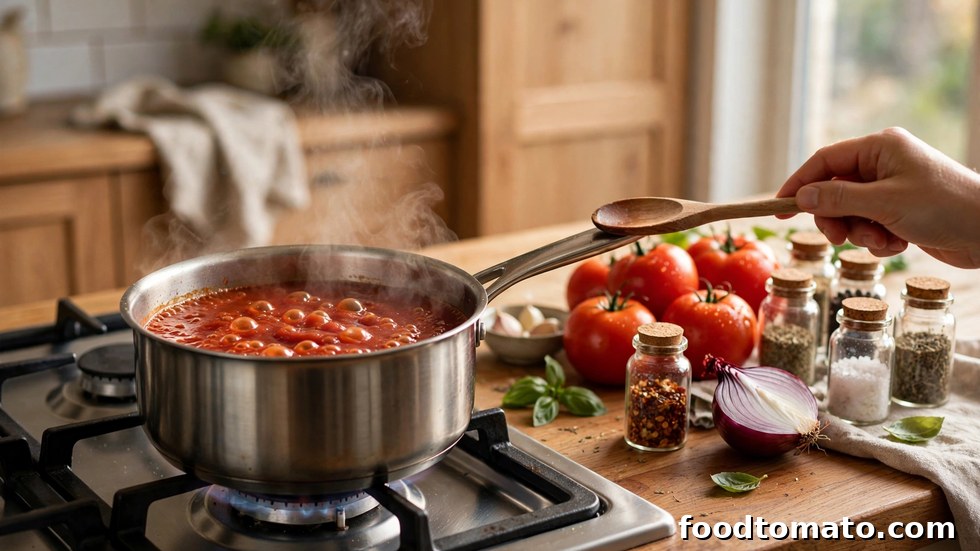
Making ketchup at home sounds like a project, but this small-batch recipe proves it is easier than you think. With just a handful of pantry ingredients and about an hour of mostly hands-off simmering, you will turn fresh tomatoes into a jar of sweet, tangy ketchup that tastes noticeably fresher than anything from a bottle. Small-batch is the perfect way to start: you only need two pounds of tomatoes, the recipe is forgiving, and if you love the result (you will), you can scale it up next time. This guide is written for absolute beginners — every step is explained, every timing is given, and nothing is left to guesswork.
Why Start With a Small Batch?
A small batch — about one and a half cups of finished ketchup — is the ideal first project for three reasons. First, it fits in a regular saucepan, so you do not need special equipment. Second, it reduces faster, which means less time watching the pot and less risk of scorching. Third, it is low-stakes: if your first attempt is not perfect, you have only used a few dollars of ingredients, and you will still have learned exactly what to adjust next time. Think of it as a practice round that also happens to produce delicious ketchup.
Ingredients
Makes about 1 1/2 cups (24 tablespoons). Prep time: 15 minutes. Cook time: 45-50 minutes.
- 2 lbs (900g) ripe Roma or paste tomatoes, quartered — or one 28-oz can whole peeled tomatoes
- 1 small yellow onion, roughly chopped
- 1 clove garlic, smashed
- 1/3 cup apple cider vinegar (5% acidity)
- 1/4 cup granulated sugar, plus more to taste
- 1 tablespoon brown sugar (optional, for depth)
- 1 1/2 teaspoons fine sea salt, plus more to taste
- 1/2 teaspoon ground allspice
- 1/2 teaspoon ground cinnamon
- 1/4 teaspoon ground cloves
- 1/4 teaspoon celery seed
- 1/4 teaspoon mustard powder
- 1/4 teaspoon freshly ground black pepper
- Pinch of cayenne pepper (optional)
Step-by-Step Instructions
- Combine the base. Put the quartered tomatoes, chopped onion, and smashed garlic in a medium heavy-bottomed saucepan or Dutch oven. Add 1/2 cup of water, cover, and bring to a gentle boil over medium-high heat.
- Soften everything. Reduce the heat to medium-low, keep the lid on, and simmer for 20 minutes, stirring once or twice. The tomatoes should be completely soft and falling apart, and the onion translucent.
- Blend until smooth. Remove from the heat and blend with an immersion blender until completely smooth, about 1 minute. (No immersion blender? Carefully transfer to a countertop blender in batches, venting the lid, then return to the pot.)
- Strain for silkiness. Pour the purée through a fine-mesh sieve into a bowl, pressing with a spoon or spatula to push through all the liquid. Discard the seeds and skins left behind. Return the strained purée to the pot.
- Add seasonings. Stir in the vinegar, both sugars, salt, allspice, cinnamon, cloves, celery seed, mustard powder, black pepper, and cayenne if using. Taste — it will be thin and sharp at this stage, which is normal.
- Simmer to thicken. Bring to a gentle simmer over medium-low heat, uncovered. Cook for 20-25 minutes, stirring every few minutes and scraping the bottom, until the ketchup thickly coats the back of a spoon and a spoonful mounded on a plate holds its shape without watery edges.
- Final seasoning. Taste the cooled ketchup (hot ketchup tastes sharper than it really is). Add sugar 1 teaspoon at a time if it needs sweetness, or a splash more vinegar if it needs brightness. Add salt in small pinches until the flavors pop.
- Jar and chill. Let cool for 20 minutes, then transfer to a clean glass jar with a tight lid. Refrigerate. The flavor improves noticeably after 24 hours as the spices meld.
Nutrition Facts
Approximate values per tablespoon (this recipe makes about 24 tablespoons):
| Nutrient | Amount |
|---|---|
| Calories | 18 |
| Total fat | 0g |
| Sodium | 85mg |
| Total carbohydrates | 4.5g |
| Sugars | 4g |
| Protein | 0.3g |
| Vitamin C | 6% DV |
| Lycopene | ~2mg |
Tips for First-Timers
Use a heavy pot
A heavy-bottomed saucepan or Dutch oven distributes heat evenly and prevents the sugars from scorching on the bottom during the final reduction. Thin pots create hot spots that can burn the ketchup in minutes, giving it a bitter taste you cannot fix. If all you have is a thin pot, stir more often and keep the heat lower.
Do not skip the straining
Straining through a fine-mesh sieve is what separates silky homemade ketchup from rustic tomato sauce. It removes seeds, skins, and any gritty spice particles. It takes five minutes and makes the single biggest difference in texture. Press firmly with the back of a spoon to get every drop of purée through.
Taste cold, not hot
Hot ketchup tastes more acidic and less sweet than it really is, which tricks beginners into adding too much sugar. Always spoon a little onto a cold plate, let it cool for a minute, and then taste. Make your final seasoning adjustments on the cooled sample — that is what the finished jar will taste like.
Easy Variations
- Smoky chipotle ketchup: Add 1 minced chipotle pepper in adobo sauce with the seasonings for a smoky, spicy version perfect for burgers.
- Curry ketchup: Stir in 1 teaspoon of mild curry powder at step 5 for a German-style currywurst condiment.
- Garlic-lover’s ketchup: Double the garlic to 2 cloves and add 1/4 teaspoon garlic powder for extra punch.
- Lower-sugar ketchup: Cut both sugars in half and add 1 grated carrot with the tomatoes; strain it out at step 4. Eat within one week.
Storage
Store your ketchup in a clean glass jar with a tight-fitting lid in the refrigerator. It will keep for 3 to 4 weeks — the vinegar and sugar act as natural preservatives. Always use a clean spoon to serve it, and discard if you notice off smells, mold, or fizzing. For longer storage, freeze the ketchup in ice cube trays, then transfer the cubes to a freezer bag; they keep for up to 6 months and thaw quickly for single servings. This recipe is not tested for shelf-stable water-bath canning, so do not store it at room temperature.
Frequently Asked Questions
My ketchup tastes too vinegary. What went wrong?
Probably nothing — it just needs time. Freshly cooked ketchup always tastes sharper than it will after a day in the fridge, when the flavors meld and mellow. If it is still too sharp after 24 hours, stir in sugar 1 teaspoon at a time until it balances. A tiny pinch of baking soda (1/8 teaspoon) can also neutralize excess acidity, but use it sparingly.
Can I double this recipe?
Yes. Double all ingredients and use a large Dutch oven. The simmering time in step 6 will increase to 35-45 minutes because there is more liquid to reduce. Everything else stays the same. Do not triple it in one pot — very large batches reduce unevenly and scorch more easily.
Do I have to peel the tomatoes?
No. Because you strain the purée in step 4, the skins are removed automatically. Quartering is enough. This saves significant prep time compared to recipes that call for blanching and peeling, which is one reason this method is so beginner-friendly.
Why is my ketchup thinner than store-bought?
It probably needs more simmering time. Keep cooking at a gentle bubble, stirring often, until a spoonful holds its shape on a plate. Remember that ketchup thickens further as it cools, so stop when it is just slightly looser than your target. If you overshoot and it gets too thick, whisk in a tablespoon of water at a time.
Key Takeaways
- A small batch (2 lbs tomatoes, about 1 1/2 cups finished) is the perfect beginner project: one saucepan, under an hour, low stakes.
- Simmer, blend, strain, season, reduce — five simple stages, with straining being the key to silky texture.
- Always taste and season the cooled ketchup, not the hot pot; flavors mellow and sweeten as the batch rests.
- Refrigerated in a clean jar, homemade ketchup keeps 3-4 weeks; freeze cubes for up to 6 months.
You now have everything you need for your first batch — so grab those tomatoes and get simmering. Once you taste ketchup made with real ingredients and seasoned exactly to your liking, the bottle on the supermarket shelf will never look the same. And when you are ready to level up, explore our guides on perfecting consistency and fixing common mistakes.
1 thought on “Small-Batch Ketchup Recipe for Beginners”