
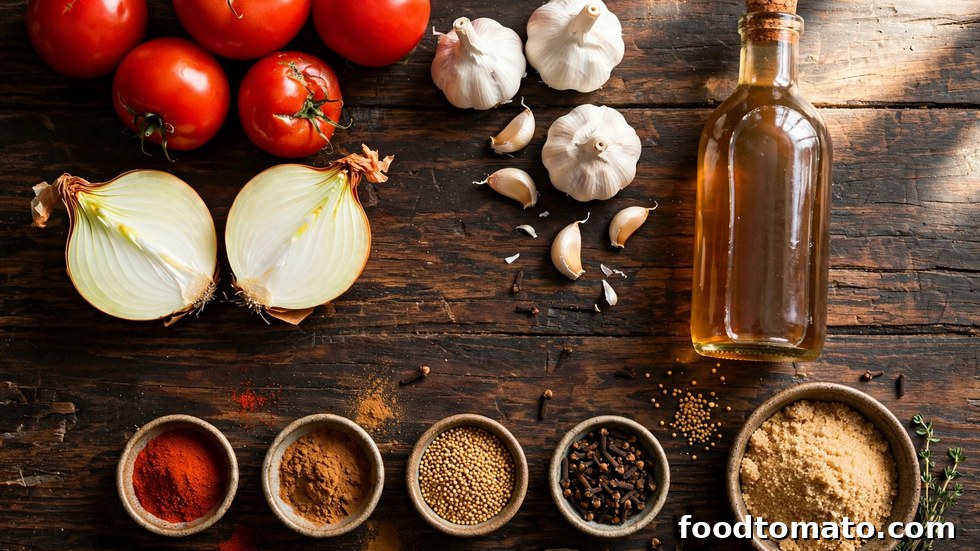
Great homemade ketchup is not about a secret recipe — it is about understanding what each ingredient actually does. Ketchup is a balancing act between sweet, sour, salty, and savory, and every component in the pot earns its place. Once you know why the tomatoes matter, what the vinegar is doing, and how the spices build that familiar flavor, you can adjust any recipe with confidence and even create your own signature batch. This guide breaks down every essential ingredient in homemade ketchup, explains the science behind it, and shows you which choices make the biggest difference in the finished jar.
Tomatoes: The Foundation
Tomatoes provide everything that makes ketchup ketchup: the body, the color, the sweetness, and the deep savory base. The variety you choose matters enormously. Paste tomatoes — Roma, San Marzano, and Amish Paste — are the gold standard because they have thick flesh, fewer seeds, and less water than salad tomatoes. Less water means less simmering time to reach a thick consistency, and a richer, more concentrated flavor in the finished product.
That said, you can make excellent ketchup from any ripe tomato. Beefsteak or heirloom tomatoes produce a brighter, fruitier ketchup with a slightly looser texture, while cherry tomatoes make a surprisingly sweet batch. What matters most is ripeness: use tomatoes at peak ripeness, ideally from a farmers’ market or your own garden in late summer. Underripe tomatoes make flat, acidic ketchup no amount of sugar can fix.
When fresh tomatoes are out of season, high-quality canned tomatoes are a completely legitimate choice — many serious home cooks prefer them in winter. Look for canned whole peeled tomatoes or crushed tomatoes with no added calcium chloride (a firming agent that keeps tomatoes from breaking down). Passata, the smooth strained tomato purée sold in jars and boxes, is another excellent shortcut; it skips the straining step entirely.
Vinegar: The Bright Backbone
Vinegar does triple duty in ketchup: it provides the signature tang, balances the sweetness, and — critically — preserves the ketchup by lowering its acidity to a safe level for refrigerator storage. Most homemade recipes call for apple cider vinegar, which adds a gentle fruity note that complements tomatoes beautifully. White distilled vinegar gives a cleaner, sharper bite and is the closest match to commercial ketchup flavor.
Do not substitute vinegar with less than 5 percent acidity, and never reduce the vinegar below what a tested recipe calls for if you plan to store the ketchup for weeks. The acid level is what keeps your batch safe. Red wine vinegar can work for a more complex, adult flavor, but avoid balsamic — its dark color and strong sweetness overwhelm the tomato. As a rule of thumb, plan on roughly 1/4 to 1/2 cup of vinegar per 2 pounds of tomatoes, adjusted to taste.
Sweeteners: More Than Just Sugar
Ketchup needs sweetness to balance the tomatoes’ acidity and the vinegar’s bite. Granulated white sugar is the classic choice and gives the cleanest flavor. Brown sugar adds molasses notes that lend depth and a slightly darker color — many ketchup lovers prefer it. Honey and maple syrup work well too, contributing their own character; honey makes a floral, mellow ketchup, while maple adds a warm, almost smoky sweetness.
Whatever sweetener you choose, add it gradually and taste as you go. Start with less than the recipe calls for — you can always add more, but you cannot take it out. A typical small batch uses 1/4 to 1/2 cup of sugar for 2 pounds of tomatoes. Remember that the ketchup will taste sweeter after it cools and the flavors meld, so stop just short of what tastes “perfect” in the hot pot.
Salt: The Flavor Amplifier
Salt does not just make ketchup salty; it suppresses bitterness, sharpens sweetness, and makes every other flavor louder. Fine sea salt or kosher salt dissolves evenly and has no off flavors — avoid iodized table salt, which can taste metallic. Add salt early in the simmer so it fully dissolves and integrates, then adjust at the end. Most small batches need 1 to 2 teaspoons, but the right amount depends on your tomatoes’ natural saltiness, so taste carefully.
Onions and Garlic: The Aromatic Base
Onion and garlic are the quiet heroes of ketchup. They melt into the sauce during the long simmer, adding savory depth that keeps ketchup from tasting like sweetened tomato sauce. Yellow onions are ideal — mild, sweet, and they break down completely. Garlic should be used with restraint: one or two cloves per batch is plenty, since its pungency intensifies as the sauce reduces. Both get strained out in most recipes, but their flavor stays behind.
The Spice Blend: Ketchup’s Signature
This is where ketchup gets its identity. The classic blend includes warm, aromatic spices that you would recognize from holiday baking — which is exactly why ketchup smells so nostalgic. The essential spices are:
- Cloves — the defining ketchup spice; a little goes a long way (1/4 teaspoon ground per batch)
- Allspice — warm and peppery, bridges the other spices (1/2 teaspoon)
- Cinnamon — adds sweetness and warmth (1/2 teaspoon)
- Celery seed — the secret savory note in many commercial recipes (1/2 teaspoon)
- Mustard powder — adds gentle heat and tang (1/2 teaspoon)
- Black pepper — freshly ground for bite (1/2 teaspoon)
- Cayenne — optional, for heat lovers (a pinch to 1/4 teaspoon)
For the smoothest result, tie whole spices (cloves, allspice berries, cinnamon sticks) in a cheesecloth sachet and fish it out before blending. Ground spices are easier but can make ketchup slightly grainy if you skip straining — always pass the finished sauce through a fine-mesh sieve for a silky texture.
Quick Ingredient Comparison
| Ingredient | Best Choice | Role in Ketchup |
|---|---|---|
| Tomatoes | Roma or San Marzano, fully ripe | Body, color, sweetness, savory base |
| Vinegar | Apple cider or white distilled (5% acidity) | Tang, balance, preservation |
| Sweetener | White or brown sugar | Balances acidity, rounds flavor |
| Salt | Fine sea salt or kosher salt | Amplifies all flavors, tames bitterness |
| Aromatics | Yellow onion, 1-2 garlic cloves | Savory depth |
| Spices | Cloves, allspice, cinnamon, celery seed | Signature warm flavor |
Frequently Asked Questions
Can I make ketchup without added sugar?
You can reduce the sugar significantly, but eliminating it entirely changes the character of the sauce. Try cutting the sugar in half first and using very ripe, sweet tomatoes. Some cooks add a grated carrot to the simmer for natural sweetness, then strain it out. A small amount of sugar also helps preservation, so sugar-free batches should be eaten within a week.
Which vinegar is best for homemade ketchup?
Apple cider vinegar is the best all-rounder: its mild fruitiness complements tomatoes without dominating. White distilled vinegar is the right pick if you want the closest match to store-bought ketchup. Whichever you use, check the label for 5 percent acidity — that is the standard needed for safe homemade condiments.
Do I need whole spices or will ground spices work?
Both work. Whole spices in a sachet give the cleanest flavor and are easy to remove, while ground spices are more convenient but require careful straining to avoid graininess. If you only have ground spices, use slightly less than a recipe calls for in whole form, since ground spices release their flavor faster.
Can I use canned tomatoes instead of fresh?
Absolutely. Good canned whole peeled or crushed tomatoes — preferably without added calcium chloride — make excellent ketchup, especially outside tomato season. One 28-ounce can replaces roughly 2 pounds of fresh tomatoes. Many experienced cooks find canned tomatoes more consistent than mediocre out-of-season fresh ones.
Key Takeaways
- Ripe paste tomatoes (Roma, San Marzano) give the thickest, richest ketchup; good canned tomatoes are a fine off-season substitute.
- Vinegar at 5 percent acidity provides the signature tang and keeps your ketchup safe — never reduce it below the recipe’s amount.
- Sweeten gradually with white or brown sugar, and season boldly with cloves, allspice, cinnamon, and celery seed for classic ketchup flavor.
- Salt, onion, and garlic are not optional extras — they build the savory depth that separates ketchup from sweetened tomato sauce.
With these ingredients in your pantry, you are ready to cook. Pick up the ripest tomatoes you can find, measure your spices, and try your first batch this week. Once you understand what each ingredient contributes, every recipe becomes a starting point — and your perfect ketchup is only a simmer away. Browse our recipe guides next for step-by-step instructions.
1 thought on “Essential Ingredients for Perfect Homemade Ketchup”