
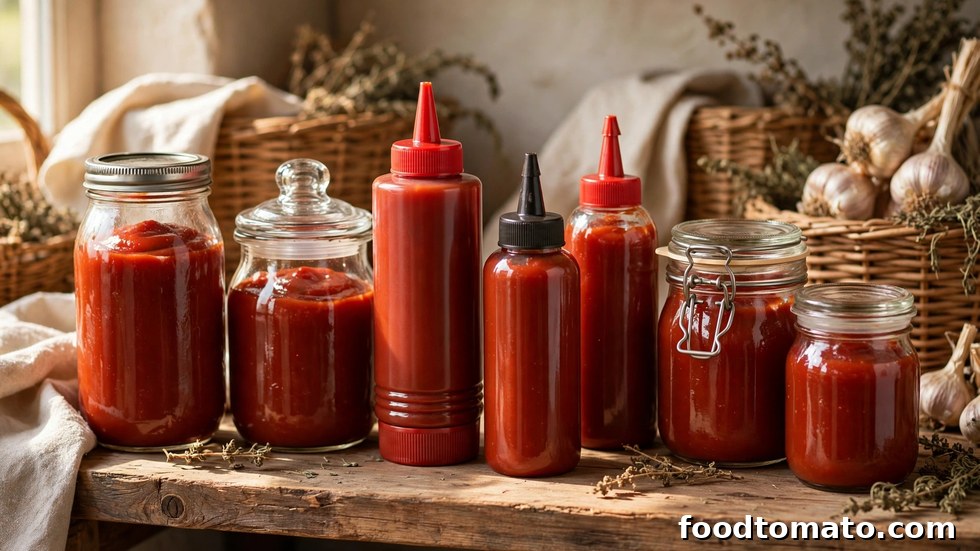
The ketchup is perfect — thick, tangy, the exact balance you wanted. Now, what do you put it in? The container matters more than most home cooks realize. It affects how long your ketchup keeps, how easily it pours, whether it is safe to can, and — if you are giving it away — how impressive it looks on the counter. Glass versus plastic, jars versus squeeze bottles, half-pints versus pints: each choice has real trade-offs. This guide compares every practical option, explains which containers are safe for water bath canning and which are only for the fridge, and helps you pick the right vessel for every batch you make.
The Golden Rule: Match the Container to the Method
Before anything else, decide how the ketchup will be stored. If you are water bath canning, you must use proper two-piece-lid canning jars — no substitutes. Grocery-store jars, decorative bottles, and anything with a one-piece lid cannot be relied on to form and hold a vacuum seal. If the ketchup is headed for the refrigerator or freezer, you have much more freedom: squeeze bottles, repurposed glass jars, and food-safe plastic all work. Choosing the container before you cook saves you from pouring a beautiful batch into something unsuitable.
Container Comparison
| Container | Best for | Canning-safe? | Pros | Cons |
|---|---|---|---|---|
| Half-pint (8 oz) canning jars | Canning, gifting | Yes | Perfect opened-jar size; processes quickly; attractive | Small for heavy users |
| Pint (16 oz) canning jars | Canning family batches | Yes | Fewer jars to process; economical | Must be finished within 3–4 weeks of opening |
| Wide-mouth half-pint jars | Thick ketchup, easy filling | Yes | Funnel-free filling; easy to clean | Slightly pricier than regular mouth |
| Squeeze bottles (food-grade) | Everyday fridge use | No | Easy dispensing; kid-friendly; no utensils needed | Not for canning or long storage |
| Glass woozy/hot-sauce bottles | Gifts, fridge storage | No (one-piece caps) | Elegant; pours precisely | Narrow neck is hard to fill and clean |
| Freezer-safe plastic containers | Freezing portions | No | Light, stackable, cheap | Can stain and absorb odors over time |
| Repurposed grocery jars | Short-term fridge storage | No | Free; reduces waste | Lids may not seal well; not canning-safe |
Canning Jars: What to Buy
For water bath canning, buy real canning jars from a known maker — Ball, Kerr, and similar brands sold for home preserving. Half-pint jars are the ideal ketchup size: an 8-ounce jar is about what a household uses in the 3–4 weeks after opening, so nothing lingers and nothing is wasted. Wide-mouth versions cost a little more but are worth it for thick ketchup — you can ladle straight in without a funnel and scrub them clean with a sponge instead of a bottle brush.
Always use new flat lids; the sealing compound is designed for one use. Bands can be reused for years if they are free of rust and dents. Before each canning session, inspect every jar for nicks or cracks around the rim — run your finger around the edge, because a tiny chip you cannot see can still break a seal. Discard or repurpose any damaged jar for dry storage.
Everyday Fridge Containers
Once a canned jar is opened, or for any batch you are refrigerating from the start, convenience rules. Food-grade squeeze bottles are the everyday champion: they dispense cleanly, keep air exposure low, and fit in the refrigerator door. Look for BPA-free bottles with a cap that actually closes — many cheap ones leak. Fill them with a funnel, leaving a little air space, and wash them thoroughly between refills.
For fridge batches, clean repurposed glass jars are perfectly fine — old jam or pickle jars with intact lids. Wash them in hot soapy water, rinse well, and make sure the lid still screws on snugly. Do not trust their seals for canning, but for three weeks in the fridge they are ideal, free, and environmentally friendly.
Containers for the Freezer
Freezing demands containers that tolerate expansion and cold. Rigid freezer-safe plastic containers with locking lids are the workhorses — fill to 1/2 inch below the rim. Wide-mouth canning jars also freeze well if you leave a full inch of headspace and avoid jars with shoulders. Heavy-duty freezer bags, frozen flat, are the space-savers: they stack like files and thaw quickly. Whatever you use, label it with contents and date, because frozen red sauces are indistinguishable after a month.
Containers for Gifting
Homemade ketchup is a gift people genuinely love, and the container is half the presentation. A half-pint canning jar with a fabric lid cover and twine looks rustic and proves the ketchup is shelf-stable. For refrigerator gifts, a woozy bottle with a shrink-wrap cap band looks professional and pours beautifully — just remind the recipient it needs refrigeration. Add a handwritten label with the flavor, the date, and “refrigerate after opening,” and you have a gift that beats anything from a store.
Frequently Asked Questions
Can I can ketchup in old pickle or jam jars?
No. Commercial jars are not manufactured to home-canning tolerances, and their lids are not designed for a reliable vacuum reseal. Use them happily for refrigerator storage, but buy proper canning jars for anything you process.
Are plastic squeeze bottles safe for hot ketchup?
Let the ketchup cool to at least lukewarm before filling plastic bottles — pouring boiling ketchup into plastic can warp it and is unnecessary. Food-grade, BPA-free bottles are fine for cooled ketchup stored in the refrigerator.
How many jars do I need for a typical batch?
A standard recipe starting from about 10 pounds of fresh tomatoes usually yields 4–5 pints (8–10 half-pints) of finished ketchup. Always prepare a couple of extra sterilized jars — running short mid-fill with hot ketchup on the stove is stressful.
Do dark-colored jars matter?
Amber or cobalt jars block light, which slows color fading — but they are specialty items and unnecessary if you store jars in a dark pantry. Standard clear jars in a dark cupboard keep ketchup just as well.
Key Takeaways
- Match the container to the storage method: only proper two-piece-lid canning jars are safe for water bath canning.
- Half-pint canning jars (preferably wide-mouth) are the ideal size for ketchup — they process fast and get used up within the safe window after opening.
- For the fridge, food-grade squeeze bottles and clean repurposed glass jars are convenient and free; for the freezer, use rigid freezer-safe containers or flat freezer bags with headspace.
- Inspect every canning jar rim before use, always use new flat lids, and label all containers with contents and date.
The right container protects all the work you put into the ketchup itself — so choose deliberately, fill carefully, and enjoy the results. If you are ready to put up a shelf-stable batch, our water bath canning guide walks through the whole process, and our labeling and gifting guide will make your jars look as good as they taste.