
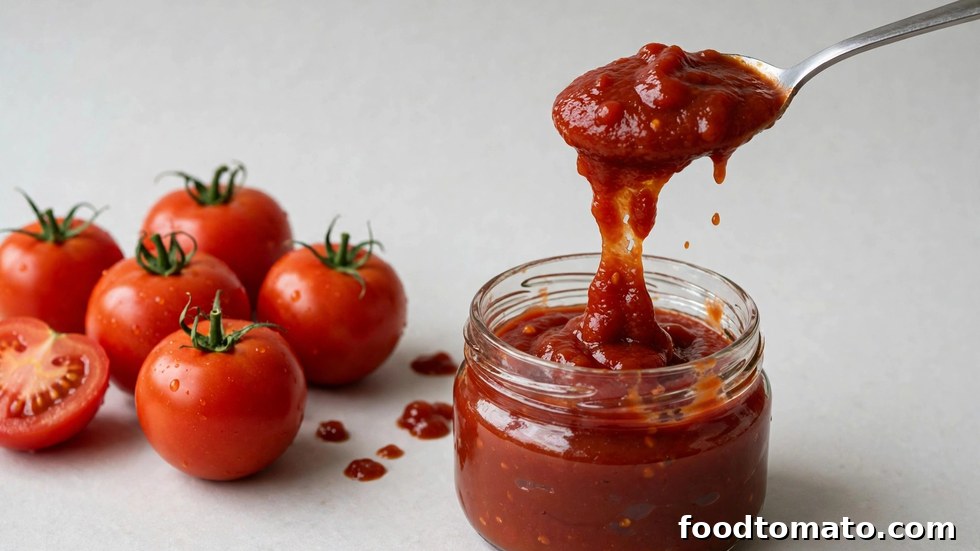
You found a jar of homemade ketchup at the back of the pantry. The label says last August — or was it the August before? It looks fine, but should you trust it? Every home preserver faces this moment, and the right answer comes from knowing exactly what spoilage looks, smells, and behaves like in ketchup — and, just as importantly, which changes are harmless. This guide gives you a clear, step-by-step inspection routine for every jar, a reference table of warning signs, and the confidence to keep what is good and discard what is not, without second-guessing.
Start Here: Check the Seal Before Anything Else
For any canned jar, the seal is the first and most important check, and you do it before opening. Press the center of the lid: it should be concave and rock-solid, with no flex or popping sound. Look at the lid from the side — a bulging or domed lid means gas is being produced inside, and that jar is done, no further inspection needed. If the jar was stored without its band (as it should be), try lifting it gently by the lid edges; a good seal holds the full weight of the jar. Any jar that fails these checks gets discarded unopened and untasted. Do not try to salvage it, reprocess it, or “just boil it” — when in doubt, throw it out.
The Sensory Inspection: Look, Smell, Then Taste
Once the seal passes, open the jar and inspect in order. First, look: the ketchup should be a rich red to deep brick-red, smooth or pleasantly thick, with no mold, no fuzzy spots, and no unusual colors. A darker layer at the very top of a jar stored for many months is usually harmless oxidation — stir it in and compare the color underneath. Next, smell: it should smell like tomatoes, vinegar, and spices — tangy and appetizing. Any yeasty, alcoholic, sour-milk, or rotten odor means spoilage. Finally, taste only if look and smell are normal: a tiny taste should be tangy-sweet and familiar. If anything tastes fizzy, sharply “off,” or fermented in a way the recipe did not intend, stop and discard the jar.
Spoilage Signs Reference
| Sign | What it means | Action |
|---|---|---|
| Bulging or domed lid | Gas from microbial growth inside | Discard unopened — do not taste |
| Lid flexes or pops when pressed | Seal failed; air and microbes entered | Discard |
| Mold — any color, any amount | Mold growth; toxins may spread invisibly in soft foods | Discard the whole jar — do not scoop it off |
| Fizzing or spurting on opening | Fermentation producing gas | Discard |
| Yeasty or alcoholic smell | Yeast fermentation | Discard |
| Slimy or ropy texture | Bacterial spoilage | Discard |
| Darkened color only, seal intact | Normal oxidation over long storage | Safe if all other checks pass; quality is reduced |
| Thin liquid layer on top | Separation, common after storage or freezing | Stir in; safe if all other checks pass |
| Slightly darker top surface | Surface oxidation | Stir in; safe if all other checks pass |
Harmless Changes You Can Ignore
Not every change is a warning. Ketchup darkens gradually over months — that is caramelization of sugars plus oxidation, and it accelerates in warm or bright storage. A watery layer on top is simple separation; stir it back in. Tiny dark specks can be caramelized spice particles from cooking. A jar that is simply past its “best within a year” window but passes every inspection is safe to eat — it just will not taste as vibrant as a fresh jar. The key distinction: harmless changes never come with a failed seal, off smells, mold, or fizz.
Refrigerated and Opened Jars: Different Rules
An opened jar in the refrigerator does not have a vacuum seal protecting it, so your inspection focuses on the contents alone. Watch for mold around the rim and lid (the most common failure point), off smells when you open it, and any fizzing. Respect the 3–4 week guideline after opening — ketchup rarely “goes bad” dramatically within that window if handled cleanly, but beyond it the risk climbs. Using a clean spoon every time, rather than dipping a used knife or pouring leftovers back in, is the single best habit for keeping an opened jar safe to the last serving.
How to Discard Spoiled Jars Safely
When a jar fails inspection, dispose of the contents where people and pets cannot get to them — a sealed bag in the outdoor trash. Do not compost spoiled canned goods, and do not feed them to animals. Wash the jar thoroughly in hot soapy water before reusing it (for non-canning purposes if the seal failure was the jar’s fault), and wash your hands and any utensils that touched the spoiled contents. If a jar ever bulges or erupts, clean the storage area too, since leaking contents can contaminate neighboring jars’ exteriors.
Frequently Asked Questions
Can I just scrape mold off the top?
No. That advice applies to hard cheeses and firm vegetables, not to soft, high-moisture foods like ketchup. Mold sends microscopic threads deep into soft foods, and some molds produce toxins that are not destroyed by cooking. If you see any mold, discard the entire jar.
My ketchup tastes a little fizzy. Is that normal?
No — fizziness means active fermentation is producing carbon dioxide, which should not happen in properly processed or refrigerated ketchup. Do not use it. (Deliberately fermented ketchup is a different product, made with salt and controlled conditions — see our fermented ketchup guide.)
The seal is fine but it is 18 months old. Safe?
Probably safe if every inspection passes, but quality will have declined noticeably — duller color, flatter flavor. Use your judgment on taste, and plan future batches so you finish them within 12 months for the best eating.
What if the jar sealed but the ketchup leaked during processing?
Minor siphoning (a little ketchup escaping during processing) is common and harmless as long as the jar sealed and headspace looks reasonable. Wipe the jar clean after cooling and check the seal — if it is solid, the ketchup inside is fine.
Key Takeaways
- Always check the seal first: concave, immovable lids only — bulging lids or failed seals mean the jar is discarded unopened.
- Inspect in order — look, smell, then taste — and discard at the first sign of mold, fizzing, off odors, or slimy texture; never taste a suspect jar.
- Darkening, top-layer separation, and surface oxidation are harmless quality changes, not spoilage, when the seal is intact and everything else checks out.
- Opened jars get 3–4 weeks in the refrigerator with clean utensils; when in doubt, throw it out — no jar of ketchup is worth the risk.
Learning to read your jars turns that moment of pantry doubt into a quick, confident decision. Keep the inspection routine — seal, look, smell, taste — and you will never have to guess. For how long each storage method keeps ketchup at its best in the first place, see our storage guide, and for keeping every future batch safe from the start, the canning safety guide has you covered.