
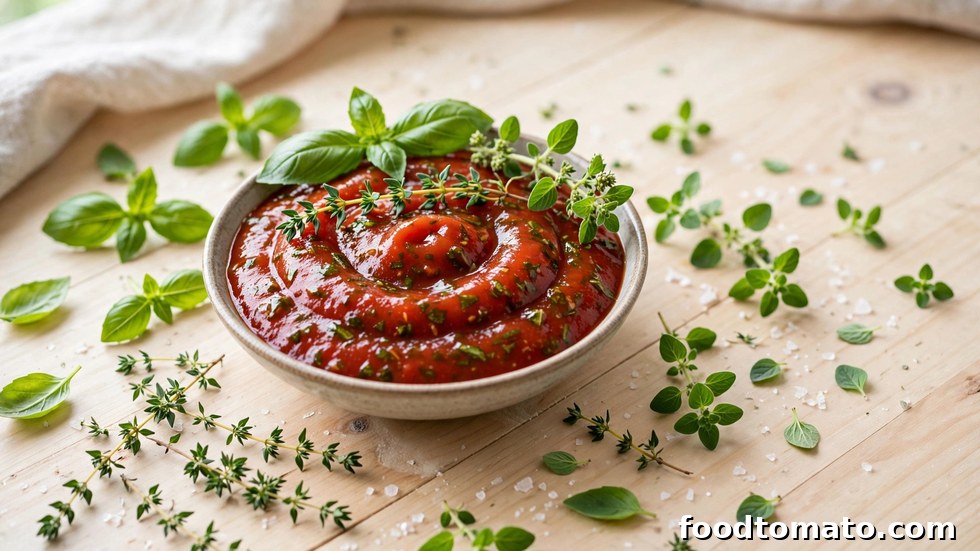
Some of the best cooking ideas come from the garden, not the spice rack. Herb-infused ketchup takes your classic homemade tomato base and steeps it with fresh basil, thyme, and oregano — the holy trinity of Mediterranean herbs — creating a condiment that tastes like summer in a jar. It is brighter than plain ketchup, more aromatic, and somehow both familiar and fresh. Think of a perfect margherita pizza or a slow-simmered marinara, concentrated into sweet-tangy ketchup form. This is the bottle you reach for with Italian food, grilled vegetables, and anything that benefits from a breath of the garden. Fresh herbs are the star, and timing is everything — this recipe shows you exactly when to add them so their flavor shines.
Why Basil, Thyme, and Oregano Transform Ketchup
Tomatoes and Mediterranean herbs are one of cooking’s great partnerships — same regions, same season, flavors made to complement each other. Basil brings sweet, peppery brightness that lifts the tomato’s fruitiness. Thyme adds earthy, slightly minty depth that grounds the sauce. Oregano contributes the bold, peppery punch you recognize from pizza sauce. Together they create a layered character no single herb can achieve: basil on top, oregano in the middle, thyme underneath. Dried herbs give a dusty, muted version; fresh herbs give you something vivid and alive. The whole technique is adding the delicate herbs at the right moment so their volatile aromatic oils survive cooking and land in the jar intact.
Ingredients
Makes about 3 cups (roughly 48 tablespoons).
- 2 cans (28 ounces / 800 g each) crushed tomatoes
- 1 cup fresh basil leaves, tightly packed, plus extra for finishing
- 6 to 8 sprigs fresh thyme
- 3 sprigs fresh oregano (or 1 teaspoon dried oregano)
- 1 medium yellow onion, finely diced
- 3 cloves garlic, minced
- 1/2 cup apple cider vinegar
- 1/3 cup light brown sugar, packed
- 2 tablespoons honey
- 3 tablespoons tomato paste
- 1 teaspoon fine sea salt, plus more to taste
- 1/2 teaspoon black pepper
- 1/4 teaspoon red pepper flakes (optional)
- 1/2 cup water
- 2 tablespoons extra-virgin olive oil
Step-by-Step Instructions
- Sweat the onion and garlic. Heat the olive oil in a large heavy pot over medium heat. Cook the onion 6 to 7 minutes until soft and translucent. Stir in the garlic; cook 1 minute more.
- Toast the tomato paste. Add the tomato paste and stir 2 minutes until it darkens slightly, building a deeper foundation for the herbs.
- Add tomatoes and hardy herbs. Pour in the crushed tomatoes, water, vinegar, brown sugar, honey, salt, pepper, and red pepper flakes. Add the thyme and oregano sprigs whole — these sturdy herbs handle the long simmer and infuse the base deeply.
- Simmer. Bring to a gentle boil, reduce to low, and simmer uncovered 55 to 65 minutes, stirring every 10 minutes, until thick and reduced by about a third. Discard the herb stems.
- Add basil off the heat. Remove from the heat and cool 5 minutes. Tear the basil leaves, stir them in, and let steep 10 minutes. Basil’s delicate aromatics are destroyed by boiling but bloom in gentle residual heat.
- Blend and brighten. Blend 2 to 3 minutes until silky, then press through a fine-mesh sieve. Taste: add salt, honey, or a squeeze of lemon. For a fresh lift, stir in 2 tablespoons of chopped fresh basil after blending.
- Jar and rest. Cool completely, funnel into clean jars, and refrigerate. The herb flavors meld and deepen over 24 hours.
Nutrition Facts
Per tablespoon (approximately 17 g):
| Nutrient | Amount |
|---|---|
| Calories | 20 |
| Total Fat | 0.3 g |
| Sodium | 80 mg |
| Total Carbohydrates | 4.4 g |
| Sugars | 3.7 g |
| Protein | 0.4 g |
| Fiber | 0.4 g |
Tips for the Best Herb-Infused Ketchup
Respect the two herb timelines
Woody herbs (thyme, oregano) need long cooking to release their flavor — they go in at the start. Tender herbs (basil) have delicate oils that boil away in minutes — they go in at the end, off the heat. Basil simmered for an hour tastes like nothing; thyme added at the end tastes raw. The split timing is the whole secret.
Use more herbs than feels reasonable
A tablespoon of basil in three cups of ketchup vanishes without a trace. Herb infusions demand generosity — a full packed cup looks like a mountain going in and melts into perfect balance. When in doubt, add more.
Tear basil, do not chop it
Tearing ruptures fewer cell walls than chopping, so the basil oxidizes less and stays sweet instead of turning bitter at the edges. Tear the leaves for the steeping step; save the knife for the fresh finish at the end.
Variations and Flavor Adjustments
For a Provencal version, swap the oregano for herbes de Provence and finish with fresh basil — wonderful on grilled lamb. For a Greek lean, double the oregano, add lemon zest during the simmer, and finish with fresh dill — made for gyros. A spicy arrabbiata style comes from doubling the red pepper flakes. For a pesto-adjacent twist, blend 2 tablespoons of toasted pine nuts and 1 tablespoon of parmesan into the finished ketchup. Out of season, dried herbs work as a winter compromise — 1 tablespoon dried basil, 2 teaspoons each dried thyme and oregano, all added at the start — but fresh basil at the finish is still worth it.
Storage
Refrigerated in clean airtight jars, it keeps 4 to 6 weeks, with the fresh basil notes brightest in the first 2 to 3 weeks. For longer storage, water-bath can in sterilized half-pint jars for 15 minutes; sealed jars keep up to a year. It also freezes well — portion into ice-cube trays for up to 6 months. Serve with a clean spoon.
Best Ways to Use It
- Flatbreads and pizza — spread as a base sauce or serve alongside for dipping crusts.
- Caprese sandwiches — with fresh mozzarella, tomato, and basil on ciabatta.
- Grilled vegetables — zucchini, eggplant, and bell peppers; the herbs echo the char.
- Chicken parmesan — spoon over breaded chicken with melted mozzarella.
- Meatball subs — the oregano-basil combination is exactly what they want.
- Frittatas and omelets — a spoonful on the side turns breakfast Italian.
Frequently Asked Questions
Can I use dried herbs instead of fresh?
In a pinch, yes — use one-third the amount and add them all at the start. The result is pleasant but less vibrant; dried basil especially loses the sweet brightness that makes this recipe special. Use fresh basil at least for the finishing step.
Why does my ketchup have no herb flavor?
Two usual causes: not enough herbs, or the basil went in too early and cooked away. Be generous — a full packed cup of basil minimum — and steep it off the heat, never boiling. To rescue a flat batch, steep fresh torn basil in the gently warmed ketchup for 15 minutes, then re-blend.
Will the basil turn the ketchup brown?
Blended basil darkens slightly to a deeper russet-red, which is normal and appetizing. It only turns dull brown if boiled — another reason to add it off the heat. The fresh basil finish also keeps the color lively.
Is this basically just marinara sauce?
It shares DNA, but the vinegar, sugar, and thicker reduction make it unmistakably ketchup. Think of it as where ketchup and marinara meet: sweet-tangy and thick like ketchup, herbal and aromatic like a good tomato sauce.
Key Takeaways
- Split your herb timing: sturdy thyme and oregano simmer from the start; delicate basil steeps off the heat at the end.
- Be generous — a full packed cup of fresh basil is the minimum; timid amounts disappear entirely.
- The “double basil” finish (fresh chopped basil stirred in after blending) adds bright top notes over cooked depth.
- Refrigerated it keeps 4 to 6 weeks with peak brightness in weeks 1 to 3; it also cans for a year and freezes well.
Herb-infused ketchup is summer cooking at its best — simple, garden-fresh, and versatile. Make it at the height of basil season, keep a jar in the fridge for pizza night and grilled vegetables, and taste how fresh herbs transform the familiar. Then explore our other homemade ketchup recipes to keep your condiment shelf interesting all year.