
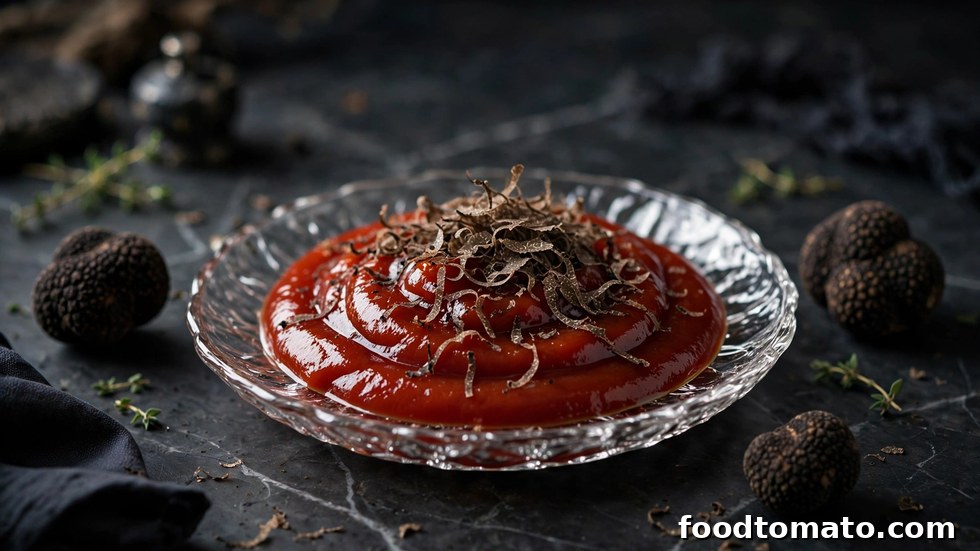
Every so often a condiment comes along that feels like a small act of indulgence, and truffle ketchup is exactly that. It takes humble tomato ketchup and finishes it with the earthy, intoxicating aroma of real truffle — the same luxury that turns plain fries into a twenty-dollar appetizer. The good news: you do not need fresh truffles or a trust fund. A small bottle of quality truffle oil or a spoonful of truffle paste, added at exactly the right moment, gives homemade ketchup a deep, musky, umami richness that tastes like pure luxury. This recipe shows you how to build a refined tomato base worthy of the truffle, when to add it so the delicate aroma survives, and how to serve it for maximum effect.
Why Truffle Belongs in Ketchup
Truffle’s magic is its aroma — earthy, musky, garlicky notes our brains read as deeply savory and luxurious. Ketchup, for all its virtues, is straightforward: sweet, sour, tomatoey. Truffle fills in everything ketchup lacks, adding a bass note of umami that makes the whole sauce taste richer. The pairing works because tomatoes are natural umami carriers, rich in glutamates, so the truffle has something to harmonize with. Think of parmesan on tomato pasta: the tomato provides the bright foundation, the savory element provides depth, and together they taste like more than the sum of their parts. The key discipline is restraint — used correctly, guests will say the ketchup tastes incredibly rich without naming why. Used heavily, it tastes like perfume.
Ingredients
Makes about 2 1/2 cups (roughly 40 tablespoons).
- 2 cans (28 ounces / 800 g each) crushed San Marzano-style tomatoes
- 1 small shallot, finely minced
- 1/3 cup apple cider vinegar
- 1/3 cup light brown sugar, packed
- 3 tablespoons tomato paste
- 1 tablespoon honey
- 1 teaspoon fine sea salt, plus more to taste
- 1/2 teaspoon white pepper
- 1/4 teaspoon ground allspice
- 1 bay leaf
- 1/2 cup water
- 1 tablespoon unsalted butter
- 2 teaspoons white truffle oil, OR 1 tablespoon truffle paste
Step-by-Step Instructions
- Sweat the shallot in butter. Melt the butter in a large heavy pot over medium heat. Cook the minced shallot 5 to 6 minutes until very soft and translucent but not browned. Shallot is milder and sweeter than onion — the right allium for a refined ketchup.
- Toast the paste and spices. Stir in the tomato paste, allspice, and white pepper. Cook 2 minutes, stirring, until the paste darkens and smells sweet and rich.
- Build the base. Add the crushed tomatoes, water, vinegar, brown sugar, honey, salt, and bay leaf. Stir well.
- Simmer gently. Bring to a gentle boil, reduce to low, and simmer uncovered 60 to 70 minutes, stirring every 10 minutes. Remove the bay leaf. Keep the profile mellow — this base is a stage for the truffle, not a show of its own.
- Blend luxuriously smooth. Cool 10 minutes, then blend a full 3 minutes until completely silky. Press through a fine-mesh sieve — for a luxury condiment, texture matters enormously.
- Cool before adding truffle — critical. Let the ketchup cool to lukewarm (below 140°F / 60°C). Truffle aroma compounds are extremely volatile and heat destroys them. Stir in the truffle oil or paste only once cooled.
- Season, jar, and rest. Taste: the truffle should be present but not dominant. Add salt, honey, or truffle oil by the half-teaspoon to balance — less is more. Funnel into clean jars and refrigerate. The aroma integrates over 24 hours; taste again the next day before adding more.
Nutrition Facts
Per tablespoon (approximately 17 g):
| Nutrient | Amount |
|---|---|
| Calories | 24 |
| Total Fat | 0.5 g |
| Sodium | 85 mg |
| Total Carbohydrates | 5.2 g |
| Sugars | 4.5 g |
| Protein | 0.4 g |
| Fiber | 0.3 g |
Tips for the Best Truffle Ketchup
Choose your truffle product wisely
Many cheap truffle oils contain no truffle at all — just synthetic aroma in olive oil. Look for an oil listing actual truffle (Tuber aestivum or Tuber melanosporum) in the ingredients, or use truffle paste, which contains real truffle pieces. A small jar costs more upfront but you use only a tablespoon per batch.
Never cook the truffle
Truffle aroma comes from delicate volatile compounds that break down above about 140°F (60°C). Adding truffle oil to a simmering pot is like pouring perfume into boiling water — the aroma vanishes. Always stir it into cooled ketchup.
Keep the base simple
A busy, heavily spiced base fights the truffle instead of showcasing it. That is why this recipe uses shallot instead of onion, white pepper instead of black, and skips bolder spices. Every choice is designed to get out of the truffle’s way.
Variations and Flavor Adjustments
For a black truffle version, use black truffle oil or paste — earthier and more intense, wonderful with red meat. For parmesan-truffle ketchup, stir 2 tablespoons of finely grated Parmigiano-Reggiano into the warm ketchup along with the truffle — the best upscale fry sauce you have ever had. For truffle-mushroom, saute 1/2 cup of finely minced porcini with the shallot; the mushroom’s umami amplifies the truffle. On a budget, 1 teaspoon of porcini powder plus a few drops of toasted sesame oil captures surprising earthy character for a fraction of the cost.
Storage
Refrigerated in clean airtight jars, truffle ketchup keeps 4 to 6 weeks — but the truffle aroma is brightest in the first 2 to 3 weeks, so make smaller batches and enjoy it fresh. Do not water-bath can this one: processing heat destroys the truffle aroma. Freezing dulls the delicate aromatics too. Store in the coldest part of the fridge and always use a clean spoon.
Best Ways to Use It
- Truffle fries — the classic: hot crispy fries tossed with parmesan, served with this for dipping.
- Gourmet burgers — with Swiss, caramelized onions, and arugula; a bistro burger at home.
- Steak frites — serve alongside simply seasoned steak; it does the work of a fancy steak sauce.
- Grilled cheese with brie — earthy truffle and creamy brie are a natural luxury pairing.
- Roasted fingerling potatoes — crispy potatoes and truffle ketchup taste like a restaurant side.
- Charcuterie boards — a ramekin next to cured meats and aged cheeses impresses every guest.
Frequently Asked Questions
Is truffle ketchup worth the cost?
You use only 2 teaspoons per batch, so the truffle cost is just a few dollars — far cheaper than ordering truffle fries at a restaurant. For that you get a condiment that tastes genuinely luxurious and elevates everything it touches.
Can I use fresh truffle instead?
You can — finely grate about 1 tablespoon into the cooled ketchup. But fresh truffles are expensive, perishable, and more delicate than concentrated truffle paste in this application. For ketchup, good truffle paste gives more reliable results at a fraction of the price.
Why can’t I taste the truffle?
Usual culprits: the oil was added while the ketchup was too hot, the oil was low quality or old (truffle oil loses potency within months of opening), or you need a touch more. Add half a teaspoon at a time to cooled ketchup, tasting between additions — and always taste after the 24-hour rest.
Can I make this vegan?
Easily — replace the butter with olive oil when sweating the shallot. Truffle oil and paste are plant-based, and everything else already is. The truffle provides so much savory depth you will not miss the butter.
Key Takeaways
- Add truffle oil or paste only after the ketchup cools below 140°F — heat destroys truffle’s delicate aroma compounds.
- Choose a truffle product with real truffle in the ingredients, and buy small bottles since truffle oil loses potency within months.
- Keep the tomato base deliberately simple so nothing competes with the truffle’s earthy character.
- Use within 2 to 3 weeks for peak aroma; do not can or freeze this variety, as both kill the truffle notes.
Truffle ketchup is the easiest luxury you will ever cook — one careful step with the truffle turns ordinary homemade ketchup into something restaurant-worthy. Make it for your next fry night and watch eyebrows rise at the first taste. Then explore our other homemade ketchup recipes for more flavors worth bottling.
1 thought on “Truffle Ketchup: Luxury in a Bottle”