
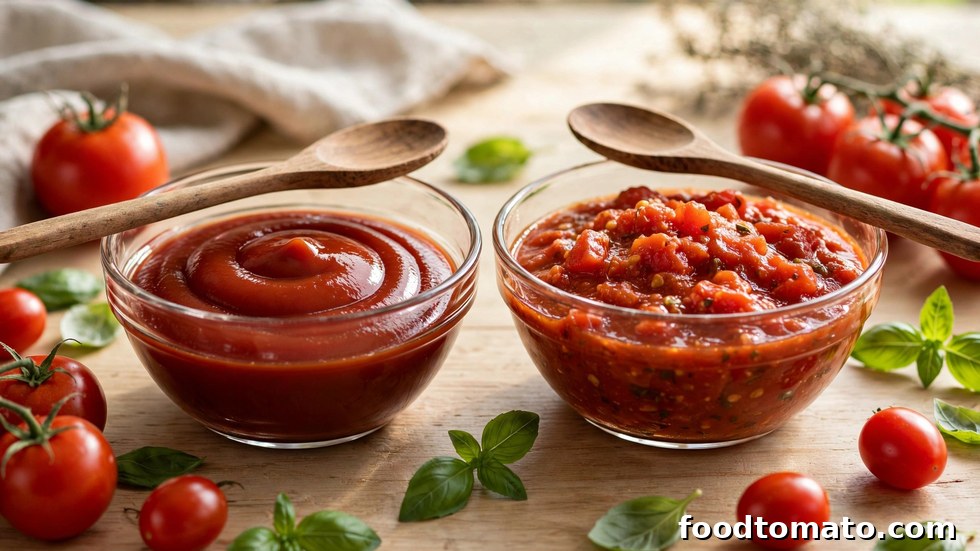
They both start with tomatoes, they both live in jars, and they both show up in Italian-inspired cooking — so what actually separates ketchup from tomato sauce? It is one of the most common questions home cooks ask, and the answer matters more than you might think. Using tomato sauce where ketchup belongs (or the reverse) can throw a recipe completely off balance. This guide lays out the real differences in ingredients, flavor, texture, and cooking use, so you always reach for the right red sauce with confidence.
The Short Answer
Ketchup is a finished condiment: sweet, vinegary, and spiced, designed to be eaten as-is on already-cooked food. Tomato sauce is a cooking ingredient: savory and lightly seasoned, designed to be cooked further as the base of a dish. Ketchup gets its identity from added sugar, vinegar, and warm spices like cloves and allspice. Tomato sauce gets its identity from tomatoes, olive oil, garlic, and herbs like basil and oregano. They share a starting point, but they are built for entirely different jobs.
Ingredients: What Goes Into Each
The ingredient lists tell the story. A classic ketchup contains tomatoes, vinegar, sugar, salt, and a spice blend of cloves, allspice, cinnamon, celery seed, and mustard. Sugar and vinegar are non-negotiable — they define ketchup’s sweet-sour profile and also preserve it. A basic tomato sauce contains tomatoes, olive oil, garlic, onion, salt, and herbs. There is typically no vinegar, very little or no sugar, and no warm baking spices. If you taste them side by side, ketchup is immediately sweeter and tangier; tomato sauce tastes fresher, more savory, and more “tomato-forward.”
Side-by-Side Comparison
| Feature | Ketchup | Tomato Sauce |
|---|---|---|
| Purpose | Finished condiment for cooked food | Cooking ingredient for building dishes |
| Sweetness | High — sugar is a defining ingredient | Low — little or no added sugar |
| Acidity source | Vinegar, added deliberately | Tomatoes’ natural acidity only |
| Key seasonings | Cloves, allspice, cinnamon, celery seed | Basil, oregano, garlic, olive oil |
| Texture | Thick, smooth, clingy | Ranges from chunky to smooth, looser |
| Served | Cold or room temperature | Hot, as part of a cooked dish |
| Shelf life (opened) | Months in the refrigerator | Days in the refrigerator |
Flavor Profile: Sweet-Tangy vs. Savory-Fresh
Taste is where the difference becomes unmistakable. Ketchup leads with sweetness, followed by a bright vinegar tang, and finishes with warm spice notes — clove, cinnamon, and allspice that linger on the palate. It is a bold, assertive flavor engineered to cut through fatty foods like burgers and fries. Tomato sauce is subtler: the tomato itself is the star, supported by garlic, olive oil, and herbs. It tastes like a component waiting for its dish — which is exactly what it is.
This flavor gap is why the two are not interchangeable. Stir ketchup into a pasta sauce and the sugar and vinegar will dominate, turning your marinara oddly sweet and sharp. Spread tomato sauce on a burger and it will taste thin and unfinished — it was never seasoned to stand alone. Each one is perfectly balanced for its role and noticeably off-balance outside of it.
Texture and Consistency
Ketchup is engineered to cling. Its thick, smooth body comes from a high concentration of tomato solids plus natural pectin released during a long simmer — commercial versions often add xanthan gum for extra stability. That famous slow pour is a feature: ketchup should sit on top of food, not soak into it. Tomato sauce varies widely by style. Marinara is relatively thin and spoonable; a slow-cooked ragù is thick but still rustic and textured. None of them aim for ketchup’s uniform, glossy smoothness.
How Each Is Used in Cooking
Ketchup shines as a finishing touch. Use it on burgers, hot dogs, fries, meatloaf glaze, and scrambled eggs — anywhere you want a sweet-tangy accent on finished food. It also works as a recipe ingredient where its specific flavor is the point: cocktail sauce (ketchup plus horseradish), Thousand Island dressing, barbecue sauce bases, and sweet-and-sour glazes all depend on ketchup’s sugar-vinegar backbone.
Tomato sauce is a foundation, not a finish. It becomes pizza sauce, pasta sauce, the base of shakshuka, braised chicken cacciatore, and chili. It goes into the pan early, simmers with other ingredients, and absorbs their flavors. Putting ketchup through that same long cooking process would concentrate its sugar and vinegar into something harsh — another reason to keep each in its lane.
Can You Substitute One for the Other?
In a pinch, yes — with adjustments. To approximate ketchup from tomato sauce, simmer one cup of tomato sauce with 2 tablespoons of sugar, 1 tablespoon of vinegar, a pinch of cloves, and a pinch of allspice until thick. To approximate tomato sauce from ketchup, dilute one cup of ketchup with 1/2 cup of water or broth, add sautéed garlic and olive oil, and simmer — but expect a sweeter result than a true tomato sauce. These substitutes work in cooked dishes like meatloaf or baked beans, but neither will fool anyone as a straight replacement on the plate.
What About Tomato Paste, Passata, and Purée?
These often get confused with both ketchup and tomato sauce, so here is a quick map. Tomato paste is tomatoes cooked down to a dense, intense concentrate — a flavor booster, not a sauce. Passata is uncooked, strained tomatoes in a bottle — smooth and neutral, a great starting point for either ketchup or sauce. Tomato purée is cooked and strained tomatoes, thicker than passata but still unseasoned. None of them are seasoned or sweetened, which is why homemade ketchup recipes often start from paste or passata and add the ketchup-specific ingredients on top.
Frequently Asked Questions
Is ketchup just sweetened tomato sauce?
Not quite. Sugar is only part of the story — ketchup also contains vinegar for tang and preservation, plus a distinctive warm spice blend (cloves, allspice, cinnamon) that tomato sauce never uses. Those three elements together — sweetness, vinegar bite, and warm spice — are what make ketchup taste like ketchup rather than sweet tomato sauce.
Why does ketchup last so much longer than tomato sauce?
Ketchup’s long shelf life comes from its high acidity and sugar content. The vinegar lowers the pH to a level where most bacteria cannot thrive, and sugar binds water that microbes need. Tomato sauce lacks both in meaningful amounts, so once opened it should be used within 3 to 4 days, while ketchup keeps for months.
Can I use ketchup on pizza instead of tomato sauce?
You can, but the result will taste noticeably sweet and spiced — more like a barbecue chicken pizza than a classic margherita. If ketchup is all you have, thin it with a little tomato paste and water, skip extra sugar, and add garlic and oregano to steer it back toward pizza territory.
Which is healthier: ketchup or tomato sauce?
Plain tomato sauce generally wins on nutrition because it contains far less added sugar and sodium per serving. But homemade ketchup lets you control both — you can cut the sugar in half and still get great flavor. Either way, both deliver lycopene, the antioxidant in cooked tomatoes linked to heart health.
Key Takeaways
- Ketchup is a sweet, vinegary, spiced condiment served as-is; tomato sauce is a savory cooking ingredient meant to be cooked further.
- Sugar, vinegar, and warm spices (cloves, allspice, cinnamon) define ketchup; olive oil, garlic, and herbs define tomato sauce.
- The two are not interchangeable without adjustments — ketchup’s sugar and vinegar overwhelm dishes built for tomato sauce.
- Tomato paste, passata, and purée are unseasoned tomato products that can serve as starting points for either one.
Now you know exactly which bottle to reach for and why. The next time a recipe calls for one or the other, you will understand what each brings to the dish — and if you are feeling ambitious, try making your own ketchup from scratch. Homemade lets you tune the sweetness, tang, and spice to your taste in a way no store shelf ever could. Check out our beginner recipe guide to get started.