
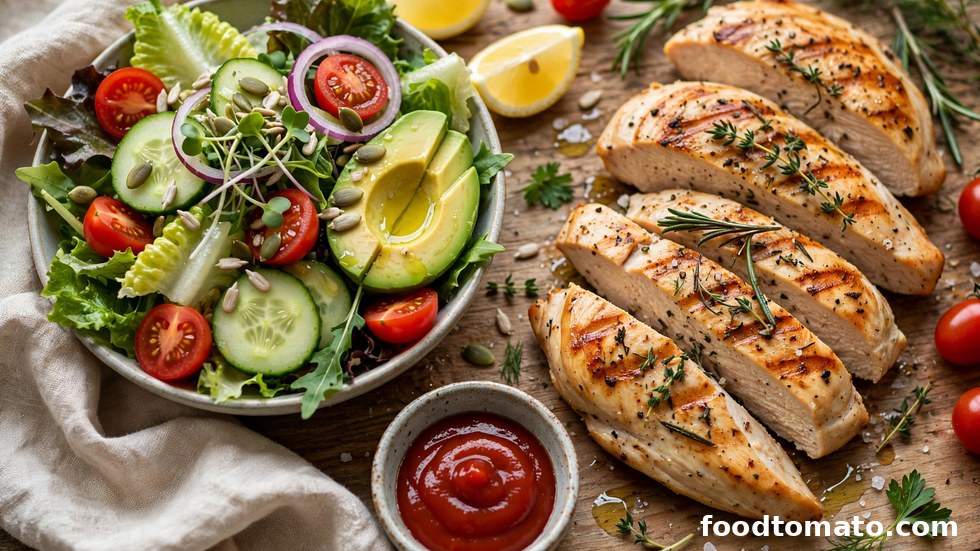
Ketchup has a reputation problem in the weight-loss world. One squeeze turns into three, and suddenly your “healthy” grilled chicken carries 80 hidden calories of sugary sauce. The truth is that ketchup itself is not the enemy — the portion is. At roughly 17 calories per tablespoon, ketchup can absolutely fit into a calorie-conscious diet when you measure it and choose (or make) a lighter version.
This guide breaks down exactly how to enjoy ketchup while losing weight: the calories and sugar numbers that matter, portion-control tricks that actually work at the table, and five light recipes that keep the flavor without the calorie creep.
- The Calorie Truth About Ketchup
- Portion Tips That Actually Work
- Choosing a Lighter Ketchup
- 5 Light Ketchup Recipes
- Smart Condiment Swaps
- A Sample Day With Ketchup Included
- FAQs
The Calorie Truth About Ketchup
A standard tablespoon of commercial ketchup (about 17 grams) contains 17 to 19 calories and 4 grams of sugar. That sounds harmless until you measure what most people actually squeeze: typical free-poured servings land between 3 and 5 tablespoons — 50 to 95 calories and up to 20 grams of sugar.
Homemade ketchup changes the math: a fruit-sweetened batch can drop to 10 to 12 calories per tablespoon. The sugar is the real lever: cutting it cuts calories almost one-for-one, since ketchup has negligible fat.
Portion Tips That Actually Work
Willpower is unreliable; systems are not. These tactics put portion control on autopilot:
- Measure the first week: Use a real tablespoon for seven days. You will calibrate your eye fast, and most people discover they were pouring double.
- Dip, don’t pour: Put one tablespoon in a small ramekin and dip instead of squeezing over food. You use far less because every bite is deliberate.
- Buy or bottle a squeeze bottle with a small nozzle: Flow rate matters. A slow stream makes free-pouring almost impossible.
- Plate the ketchup away from the food: A pool of ketchup on the plate invites scooping. Keep the ramekin on the side so each dip is a choice.
- Pre-log it: If you track calories, log two tablespoons before you eat. What gets logged rarely gets doubled.
- Pair with high-volume foods: Ketchup stretches furthest over bulky, low-calorie foods like roasted cauliflower or grilled zucchini — flavor in every bite without refills.
Pre-portioning is one of the most reliable weight-loss behaviors ever studied.
Choosing a Lighter Ketchup
Not all bottles are equal. When you are shopping, flip the bottle and compare:
- Sugar per serving: Standard ketchup has 4g per tablespoon. “No sugar added” versions have 1g or less, saving roughly 12 calories per tablespoon.
- Ingredient list length: Fewer ingredients usually mean less added starch and syrup used as thickeners.
- Sweetener type: Ketchups sweetened with fruit or stevia beat high-fructose corn syrup versions on both calories and blood-sugar impact.
- Sodium: Lower-sodium options exist if you are also watching salt; our low-sodium homemade ketchup recipe shows how to make one at home with full flavor.
The lightest option of all is homemade, because you control every gram. Our sugar-free tomato ketchup recipe naturally sweetened with fruit lands at roughly half the calories of the store brand, and you can thin it with extra vinegar to stretch servings further. If you follow a low-carb plan, the keto-friendly ketchup low-carb recipe is another excellent base for light, diet-friendly meals.
5 Light Ketchup Recipes
These five ideas keep ketchup in your life at a fraction of the usual calories.
1. Spicy Yogurt-Ketchup Dip (35 calories per 1/4 cup)
Mix 2 tablespoons light ketchup with 1/4 cup nonfat Greek yogurt, a squeeze of lemon, and a pinch of cayenne. A creamy, protein-rich dip for vegetables or grilled shrimp at a third of the calories by volume.
2. Skinny Cocktail Sauce (20 calories per 2 tablespoons)
Combine 3 tablespoons ketchup with 1 teaspoon prepared horseradish and a dash of hot sauce. Classic shrimp-cocktail flavor — the horseradish does the heavy lifting so you need less ketchup.
3. Light BBQ Glaze (25 calories per 2 tablespoons)
Whisk 3 tablespoons ketchup with 1 tablespoon apple cider vinegar, smoked paprika, garlic powder, and a few drops of liquid smoke. Brush thinly over grilled chicken breast or turkey burgers instead of slathering.
4. Ketchup-Mustard Vinaigrette (30 calories per 2 tablespoons)
Shake 1 tablespoon ketchup with 1 tablespoon Dijon mustard, 2 tablespoons red wine vinegar, and 1 teaspoon olive oil. It coats a huge salad for the calorie cost of a single tablespoon of dressing.
5. Turkey Meatloaf With Ketchup Topping (portion-smart)
Mix lean ground turkey with oats, egg white, and diced vegetables, then spread just 2 tablespoons of ketchup over the whole loaf before baking. Divided across 6 servings, the ketchup adds barely 6 calories each — proof that the topping is never the problem, the pour is.
Smart Condiment Swaps
Sometimes the best portion tip is choosing a naturally lighter vehicle for flavor:
- Salsa — 10 calories per 2 tablespoons, and the chunkiness slows you down.
- Mustard — 3 to 5 calories per teaspoon with zero sugar.
- Hot sauce — essentially zero calories; adds heat so you need less sweetness.
- Homemade ketchup thinned with vinegar — stretch one tablespoon of ketchup into two tablespoons of tangy sauce with a splash of vinegar and water.
Keep a lighter condiment rotation so ketchup stays a treat-sized pleasure rather than a daily calorie leak.
A Sample Day With Ketchup Included
Here is what a realistic 1,600-calorie day looks like with ketchup comfortably included:
- Breakfast: Veggie omelet with 1 tablespoon ketchup on the side (320 calories)
- Lunch: Grilled chicken salad with ketchup-mustard vinaigrette (380 calories)
- Snack: Greek yogurt-ketchup dip with cucumber and bell pepper sticks (120 calories)
- Dinner: Turkey burger (no bun) with sweet potato wedges and 1 measured tablespoon of ketchup (520 calories)
- Evening snack: Apple slices with cinnamon (95 calories)
Four ketchup appearances, roughly 60 condiment calories total. The philosophy: measure it, lighten it, and keep enjoying it.
FAQs
Is ketchup bad for weight loss?
No — only portions and totals matter. Ketchup is low-calorie per measured tablespoon; problems start when servings go unmeasured. Measured, lighter versions fit easily into a calorie deficit.
How many calories are in one tablespoon of ketchup?
Standard commercial ketchup has 17 to 19 calories per tablespoon. No-sugar-added versions have about 5 to 10, and homemade fruit-sweetened ketchup lands around 10 to 12.
Is sugar-free ketchup better for losing weight?
It can help, since it removes the main calorie source in ketchup. But the bigger win is portion control — a measured tablespoon of regular ketchup beats an unmeasured pour of sugar-free every time.
Can I eat ketchup every day on a diet?
Yes, if it fits your calorie and sugar targets. One to two measured tablespoons daily adds only 20 to 40 calories, which is negligible in most diet plans.
What is the lowest-calorie way to use ketchup?
Mix it into lower-calorie bases — Greek yogurt, vinegar, or mustard — so the flavor spreads across more volume. The yogurt-ketchup dip above gives you a quarter cup of dip for 35 calories.