
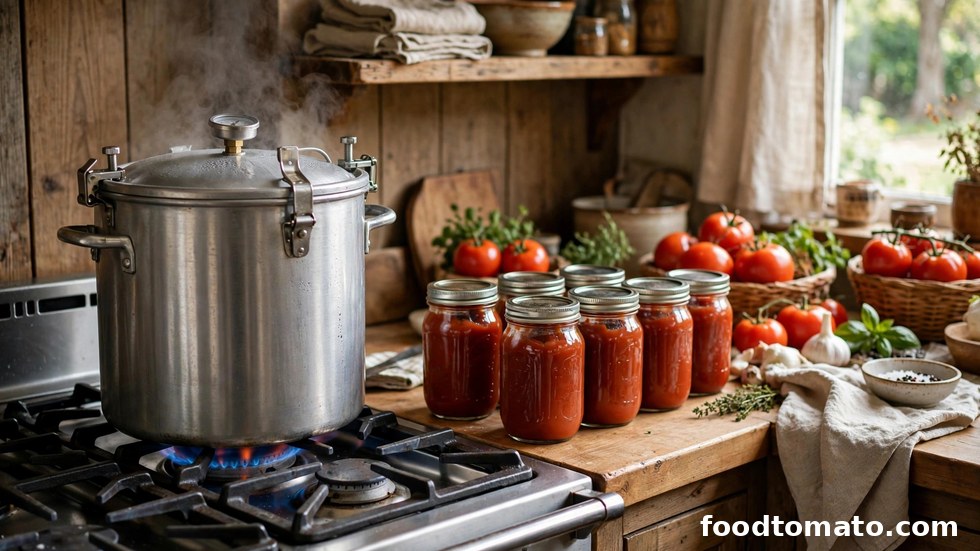
Picture this: it is mid-January, and you reach into the pantry and pull out a gleaming jar of ruby-red homemade ketchup that tastes like peak summer. That is the promise of canning, and a hissing pressure canner on the stovetop feels like the most serious way to do it. But here is the twist most home canners do not expect: most homemade ketchup never actually needs pressure canning at all.
This guide covers why a water bath is the ketchup standard, when pressure canning earns its place, how the two methods compare, the equipment you need, and a safe procedure — so you pick the right method confidently.
Contents
- Why Most Ketchup Doesn’t Need Pressure Canning
- When Pressure Canning Is Worth It
- Pressure Canning vs Water Bath at a Glance
- Equipment You’ll Need
- How to Pressure Can Ketchup, Step by Step
- Mistakes That Ruin Seals
- Storing and Checking Your Jars
- FAQs
Why Most Ketchup Doesn’t Need Pressure Canning
The choice between pressure canning and water-bath canning always comes down to acidity. High-acid foods (pH 4.6 or below) are safely processed in a boiling-water bath; low-acid foods need the 240°F heat of a pressure canner to destroy dangerous spores. Classic homemade ketchup is high-acid: tomatoes sit near the borderline, but the vinegar in a standard recipe pulls the pH safely down.
That is why every reputable canning authority recommends a water bath for ketchup. It is simpler, faster, and gentler on the bright flavor and vivid red color that long pressure processing can dull. A water bath is not the lazy choice here — it is the correct one. For the full walkthrough, see our guide on how to can tomato ketchup safely with the water-bath method, which covers timing, jar prep, and altitude adjustments.
The acidity rule you must respect
Never improvise away the acid. Cutting the vinegar for a milder ketchup, swapping sweet peppers for half the tomatoes, or adding low-acid vegetables can push pH above 4.6 — and then a water bath is no longer safe. Never reduce the acid in a tested canning recipe. Want a less tangy ketchup? Find a recipe tested that way instead of adjusting one yourself.
When Pressure Canning Is Worth It
If ketchup is normally water-bathed, when does the pressure canner come out? Several legitimate situations:
- Very large batches. With a bumper crop filling dozens of jars, a pressure canner holds more per load and the session can run faster at scale.
- Low-acid specialty recipes. A roasted pepper ketchup heavy on peppers, or a smoky chipotle version bulked with onions, may not be acidic enough for a water bath. Pressure canning gives a safety margin near the pH borderline.
- Extreme altitude. High up, water boils cooler, which weakens the water-bath method. A pressure canner restores reliably safe temperatures.
Notice the common thread: scale, recipe chemistry, convenience — never flavor. Pressure-canned ketchup will not taste better than water-bathed ketchup.
Pressure Canning vs Water Bath at a Glance
- Temperature: water bath tops out at 212°F; a pressure canner reaches 240°F+.
- Total time: similar processing times, but the pressure canner takes longer to heat up and cool down.
- Cost: a water bath needs only a deep pot and rack; a pressure canner is a real investment.
- Flavor and color: the water bath is gentler and preserves brightness better.
- Safety margin: pressure canning kills botulism spores even in low-acid conditions; the water bath relies on the recipe’s acidity.
Use a water bath for standard vinegar-based ketchup; use a pressure canner when your recipe or circumstances demand it. If you are still deciding batch sizes for either method, our homemade ketchup storage guide will help you plan.
Equipment You’ll Need
- A pressure canner — not a pressure cooker; canners are larger and have calibrated gauges or weights.
- Canning jars (pints or half-pints) with new lids and reusable bands.
- Jar lifter, funnel, lid wand, and bubble remover — the standard toolkit.
- pH test strips or a meter if your recipe is not from a tested source.
- A tested ketchup recipe with specified vinegar amounts — do not improvise the acid.
- A cooling surface where jars can sit undisturbed for 12–24 hours.
How to Pressure Can Ketchup, Step by Step
1. Cook the ketchup
Simmer the ketchup to the desired thickness per the tested recipe. Keep it hot while filling jars — hot pack is essential for even heat penetration.
2. Prep jars and canner
Wash jars in hot soapy water and keep them hot. Add 2–3 inches of hot water to the canner and bring it to a simmer.
3. Fill the jars
Funnel hot ketchup into each jar, leaving 1/2 inch of headspace. Release trapped air with a bubble remover, wipe rims spotlessly clean, center the lids, and screw bands on fingertip-tight — not cranked down.
4. Process
Set jars on the canner rack, fasten the lid, and vent steam for 10 full minutes before pressurizing. Bring the canner to the specified pressure (usually 10–15 PSI depending on altitude) and hold it for the full processing time.
5. Cool and check seals
Turn off the heat and let pressure return to zero naturally — do not force-cool. Rest the jars undisturbed for 12–24 hours, then press each lid: a proper seal is concave and does not flex. Unsealed jars go into the refrigerator for immediate use, or into the freezer — see our honest look at whether freezing ketchup really works first.
Mistakes That Ruin Seals
- Skipping the vent. Ten full minutes of venting is non-negotiable; air pockets mean lower processing temperatures.
- Reusing lids. The sealing compound is single-use. Old lids are the top cause of seal failures.
- Dirty rims. A thin smear of ketchup can stop the lid seating. Wipe every rim, every time.
- Over-tightened bands. Cranked bands trap air and buckle lids. Fingertip-tight only.
- Wrong headspace. Too little and ketchup siphons under the lid; too much and the jar may not vent properly. Stick to 1/2 inch.
Storing and Checking Your Jars
Properly pressure-canned ketchup keeps 12–18 months in a cool, dark, dry place. Remove the bands before storing so a broken seal cannot hide. Label every jar with contents and date, oldest batches in front. If a lid pops, bulges, leaks, or smells off when opened, discard it without tasting. Food safety has no second chances.
FAQs
Can I pressure can any ketchup recipe?
Yes, with a caveat: pressure canning a water-bath recipe is safe but may slightly dull color and flavor. Use a processing time from a tested pressure-canning recipe of similar density rather than guessing.
How long do I process ketchup in a pressure canner?
A common guideline is 15–20 minutes for pints at 10–15 PSI (higher pressures at higher altitudes). Always follow the tested recipe’s stated time.
Is pressure-canned ketchup safer than water-bathed ketchup?
For a properly acidic recipe, both are equally safe. Pressure canning’s advantage only appears with low-acid recipes or extreme altitudes, where a water bath cannot guarantee safety.
Why did my jars lose liquid during processing?
Siphoning usually comes from cooling the canner too fast or wrong headspace. Let the pressure drop naturally to zero and double-check your 1/2-inch headspace next time.